






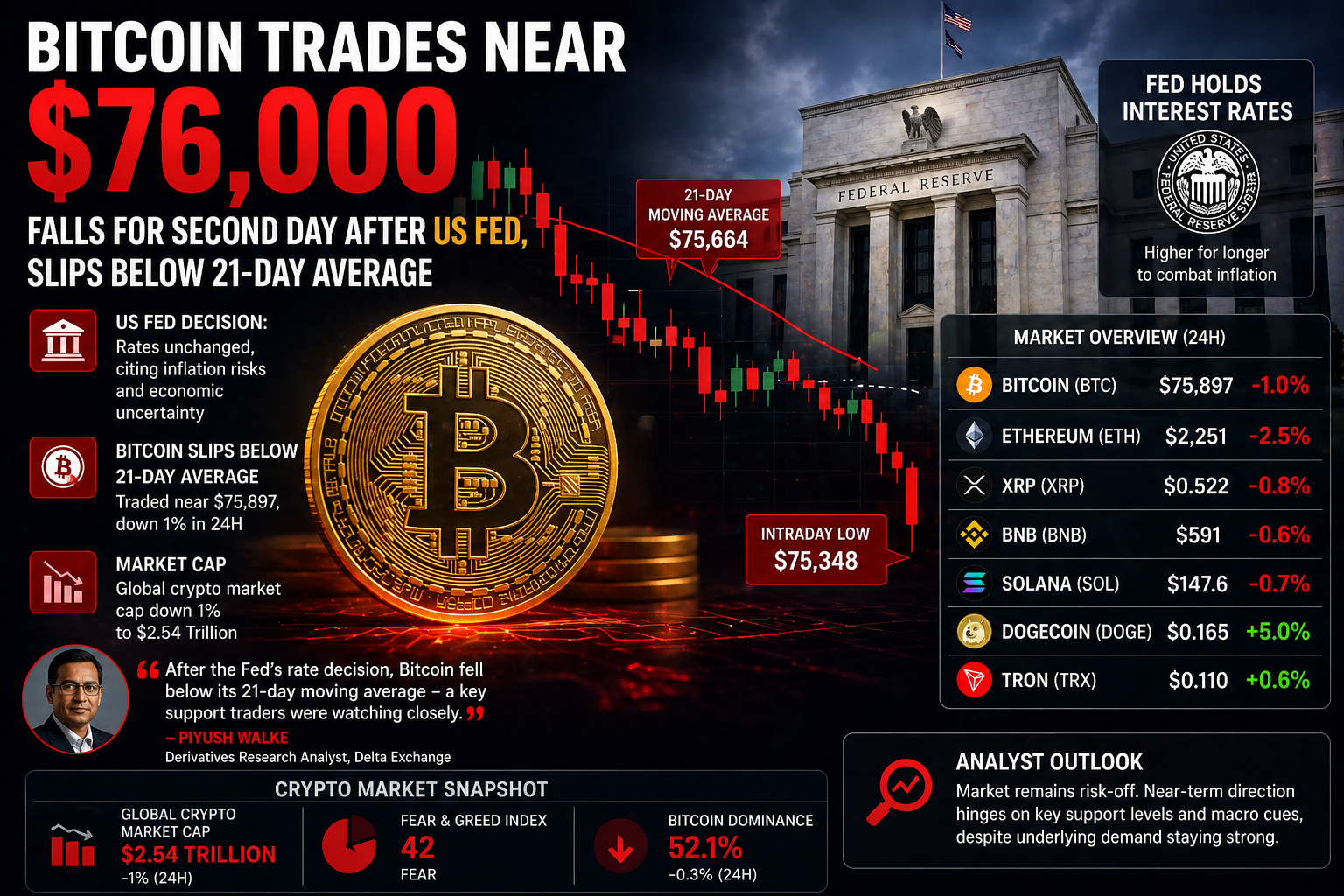
Bitcoin hovered around the $76,000 mark but declined for the second consecutive day following the latest decision by the Federal Reserve to hold interest rates steady. The leading cryptocurrency dropped to approximately $75,800, falling below its closely watched 21-day moving average—a level traders had been monitoring as a short-term support zone. This move reflects broader macro pressure on risk assets, a trend also highlighted in Bitcoin’s strong inverse correlation with the dollar index.
The decline came despite the Fed’s decision aligning with market expectations. Analysts noted that sentiment weakened during the Fed Chair’s commentary, triggering a cautious response across crypto markets. Bitcoin briefly touched an intraday low near $75,300, signaling that traders remain sensitive to macroeconomic cues, including inflation outlook and monetary policy direction.
Ethereum and Altcoins Follow Broader Market Weakness
Alongside Bitcoin, Ethereum also faced selling pressure, dropping around 2.5% to trade near $2,250. Major altcoins such as XRP, BNB, Solana, and Cardano recorded modest declines, reflecting a broader risk-off sentiment across the market. However, some tokens like Dogecoin showed relative strength, posting gains amid volatility.
The overall crypto market capitalization slipped by approximately 1% to $2.54 trillion, according to CoinMarketCap data. This pullback suggests that while underlying demand remains intact, short-term momentum is being influenced by macro conditions rather than purely crypto-native factors.
Macro Uncertainty Continues to Drive Market Sentiment
Market analysts emphasized that the current decline is largely macro-driven rather than a reflection of weakening fundamentals. The Federal Reserve’s stance on interest rates, combined with ongoing inflation concerns, continues to shape investor behavior across both traditional and digital asset markets.
This aligns with broader trends in the crypto ecosystem, where price movements are increasingly tied to global liquidity conditions. As explored in crypto market funding and investment trends, capital flows remain active, but short-term volatility persists due to external economic factors.
Key Technical Levels in Focus
From a technical perspective, Bitcoin’s drop below its 21-day moving average signals potential short-term weakness. Traders are now closely watching whether BTC can reclaim this level or if further downside toward lower support zones may follow.
Ethereum is showing a similar pattern, struggling to maintain momentum below key resistance levels. The near-term direction for both assets will likely depend on whether buyers step in at current levels or if macro pressures continue to dominate.
For ongoing price tracking and market indicators, investors can monitor live Bitcoin price data.
Outlook: Cautious Momentum Ahead of Key Market Signals
Despite the recent pullback, some analysts believe the market could regain bullish momentum heading into the monthly close, provided key support levels hold. Institutional demand and long-term fundamentals remain supportive, but near-term price action is expected to stay sensitive to macroeconomic developments.
As the crypto market continues to mature, the influence of central bank decisions and global economic trends is becoming more pronounced. This evolving dynamic suggests that traders will need to balance both technical indicators and macro signals when assessing market direction.