






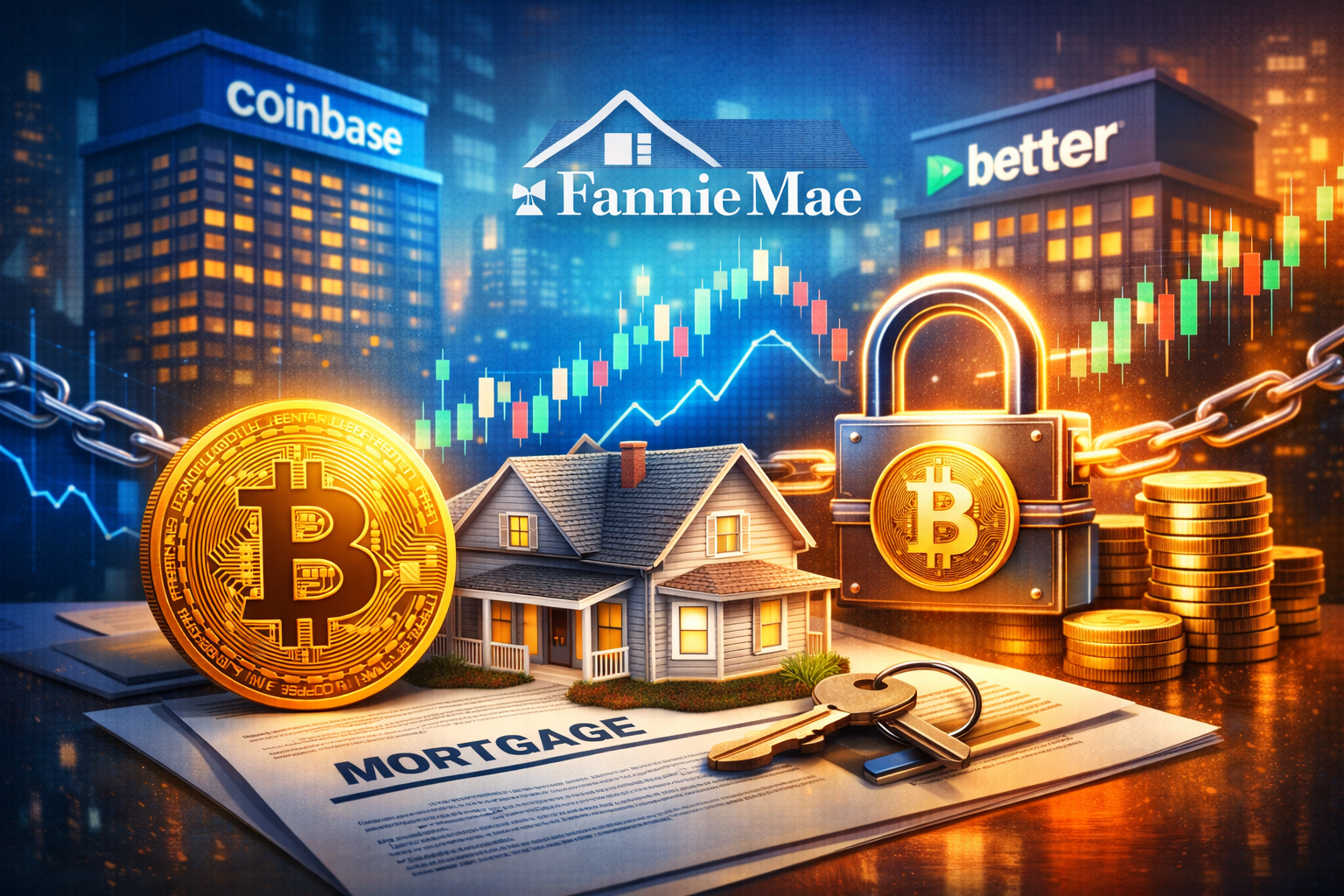
In a major step toward bridging traditional finance and crypto, homebuyers can now secure a mortgage using Bitcoin as collateral—without selling their holdings. A new product launched by Coinbase in partnership with Better is opening the door for crypto investors to access home financing while staying fully invested in Bitcoin.
A New Era of Bitcoin-Backed Mortgages
The newly introduced mortgage solution allows borrowers to pledge their Bitcoin (BTC)—and even USDC—as collateral for a fiat-based home loan. Instead of liquidating crypto assets, users can lock them securely in custody while accessing funds to purchase property.
What makes this development particularly significant is its approval by Fannie Mae. This means these Bitcoin-backed mortgages are now eligible to be bundled and sold in the secondary mortgage market—just like traditional home loans.
This is a first-of-its-kind milestone for crypto-backed lending at this scale.
How This Mortgage Model Works
Unlike typical crypto loans, where assets are often sold if prices drop, this structure operates within a regulated mortgage framework.
Here’s how it stands out:
- Borrowers lock their BTC instead of selling it
- They retain exposure to potential price appreciation
- Loans are issued in fiat currency (USD)
- Backed by traditional mortgage systems via Fannie Mae
This hybrid approach blends crypto custody with traditional lending infrastructure—bringing legitimacy and stability to crypto-based financial products.
What About Liquidation Risk?
One of the biggest pain points in crypto lending has been forced liquidation.
Platforms like Aave and centralized lenders typically liquidate collateral when the loan-to-value (LTV) ratio crosses a certain threshold—often during market downturns.
However, this new mortgage product claims to eliminate forced liquidation risk.
While full technical details haven’t been publicly disclosed, the involvement of Fannie Mae suggests:
- Conservative LTV ratios
- Built-in volatility buffers
- Structured risk management within mortgage norms
This means borrowers may avoid the sudden sell-offs that are common in DeFi lending.
Why This Is a Big Deal for Bitcoin Holders
For long-term Bitcoin investors, this could be a game-changing financial tool.
Key advantages:
1. No Need to Sell BTC
- Maintain long-term exposure
- Avoid missing future upside
2. Potential Tax Benefits
- No sale = no immediate capital gains tax
- Particularly valuable for early adopters with large gains
3. Real-World Utility
- Turns Bitcoin into a productive financial asset
- Enables home ownership without exiting crypto positions
Bigger Picture: Crypto Meets Traditional Finance
This launch reflects a broader trend—Bitcoin evolving from a speculative asset into a recognized financial instrument.
With increasing institutional adoption and integration into traditional systems:
- Crypto exchanges like Coinbase are expanding into structured finance
- Mortgage systems are beginning to accept digital assets
- The gap between Web3 and traditional finance is shrinking rapidly
This collaboration between Coinbase, Better, and Fannie Mae marks a significant step toward mainstream crypto adoption in everyday financial life.
What to Watch Next
While the concept is promising, several details will determine its long-term success:
- Exact loan-to-value (LTV) ratios
- How collateral is managed during extreme volatility
- Whether locked BTC can generate yield
- Early adoption rates and lender participation
If successful, this model could become a blueprint for future crypto-backed financial products.
Final Thoughts
The ability to buy a home without selling Bitcoin represents a major evolution in how digital assets are used. Instead of choosing between liquidity and long-term holding, investors may now be able to have both.
As traditional finance continues to integrate with Web3 infrastructure, products like this could redefine how wealth is accessed, leveraged, and preserved.
Disclaimer
This article is for informational purposes only and does not constitute financial advice. Cryptocurrency markets are highly volatile. Always conduct your own research before making financial decisions.