





Introduction
Smart contract vulnerabilities remain one of the biggest obstacles preventing mainstream trust in the Web3 ecosystem. Over the past few years, billions of dollars have been lost through protocol exploits, bridge attacks, flash loan manipulations, and coding errors that could potentially have been detected before deployment.
- Introduction
- Why Web3 Security Has Become a Critical Industry Problem
- What Is CertiK’s AI Auditor?
- How the AI Auditing System Works
- Why AI Auditing Matters for Ethereum and DeFi
- Security Is Moving Earlier Into Developer Workflows
- Can AI Replace Human Smart Contract Auditors?
- AI Auditing vs Traditional Smart Contract Audits
- Challenges and Limitations of AI Security Systems
- The Bigger Trend: AI and Web3 Infrastructure Convergence
- Final Thoughts
- FAQ
As decentralized finance (DeFi), tokenized assets, and blockchain infrastructure continue expanding, the need for scalable and reliable security systems has become more urgent than ever. Traditional smart contract auditing methods still play a critical role, but the rapid pace of Web3 development is pushing security firms toward automation and AI-assisted analysis.
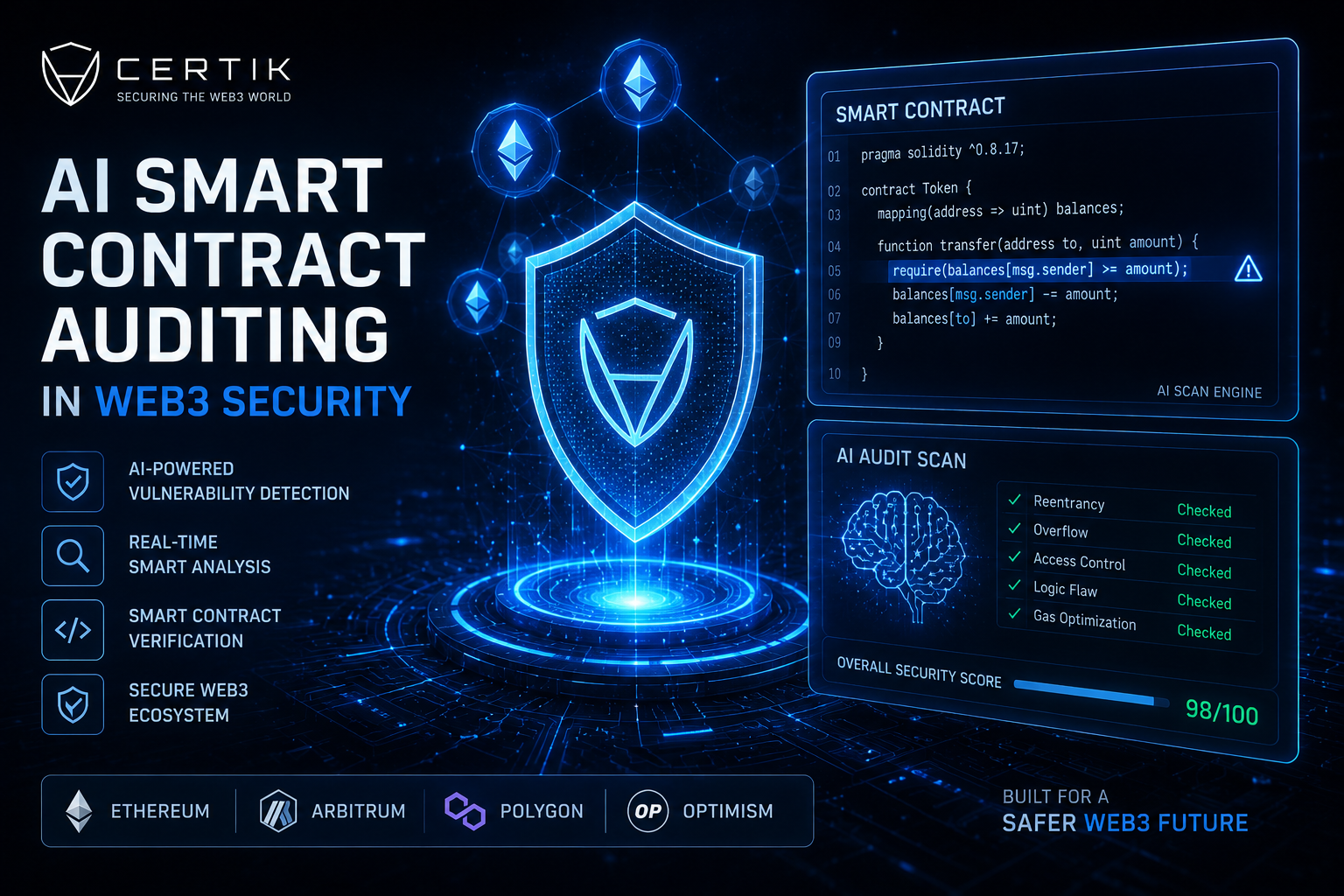
This growing demand for scalable security solutions is exactly why blockchain security company CertiK has launched its new AI-powered auditing system publicly after months of internal testing.
According to the company, the AI Auditor achieved an 88.6% exact hit rate when tested against real-world Web3 security incidents, signaling a major step toward AI-assisted vulnerability detection in decentralized ecosystems.
But beyond the headline accuracy number, the bigger question is this:
Can AI-powered auditing actually reduce the growing number of Web3 exploits?
Why Web3 Security Has Become a Critical Industry Problem
Security remains one of the largest challenges facing blockchain adoption today DeFi security risks.
Despite improvements in infrastructure and developer tooling, the Web3 industry continues to suffer from:
- smart contract vulnerabilities
- bridge exploits
- governance attacks
- oracle manipulation
- wallet compromises
- phishing campaigns
- protocol misconfigurations
According to reports from Chainalysis and other blockchain analytics firms, billions of dollars have been lost through crypto-related exploits over recent years.
Some of the industry’s most damaging incidents include:
- the Ronin Bridge exploit
- the Wormhole bridge hack
- the Poly Network exploit
- multiple DeFi flash loan attacks
- cross-chain bridge vulnerabilities
Many of these incidents were linked to weaknesses in smart contract logic or overlooked security flaws.
As blockchain ecosystems grow increasingly complex, manually auditing every protocol becomes more difficult and resource-intensive.
This is where AI-assisted auditing tools are beginning to attract serious attention.
What Is CertiK’s AI Auditor?
CertiK’s new AI Auditor is designed to automate parts of the smart contract security review process using machine learning and advanced vulnerability detection systems.
Rather than relying solely on manual audits, the system introduces an additional automated security layer capable of:
- analyzing smart contract code
- identifying suspicious patterns
- detecting vulnerabilities
- prioritizing critical risks
- reducing false positives
- assisting developers during coding workflows
The company claims the AI Auditor achieved an 88.6% cumulative exact hit rate when tested against 35 real-world security incidents from 2026.
This figure is important because it suggests the tool is not only operating in theoretical environments but also demonstrating effectiveness against vulnerabilities that previously resulted in actual exploits.
Unlike traditional automated scanners that often overwhelm developers with noisy results, CertiK says its platform focuses on generating “high-signal, low-noise” outputs that improve usability for engineering teams.
How the AI Auditing System Works
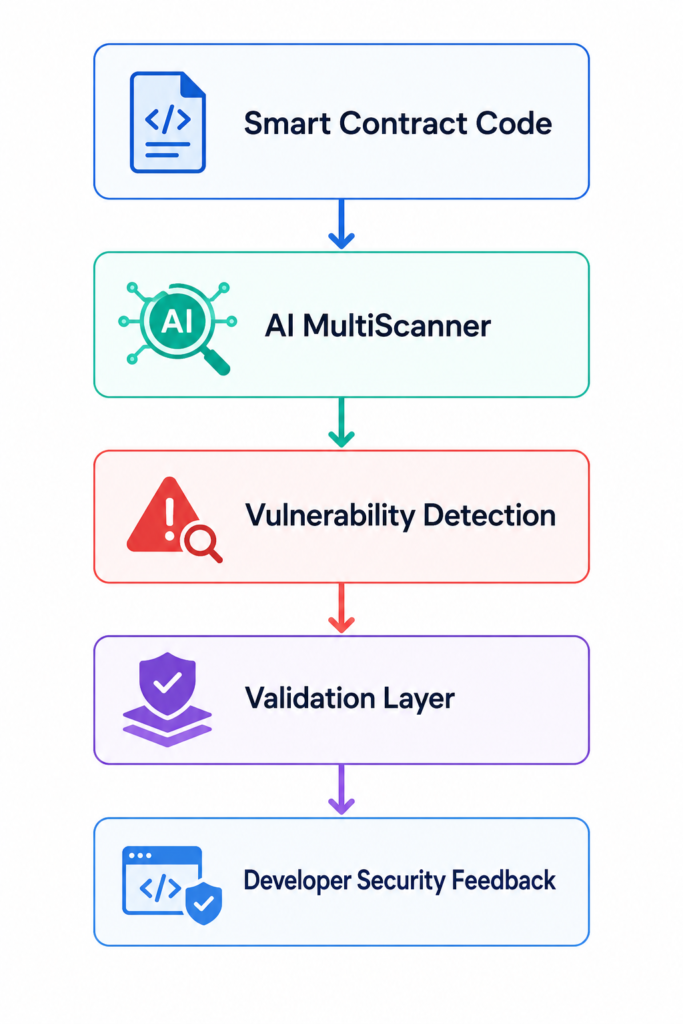
The architecture behind the AI Auditor relies on a layered detection and validation framework.
MultiScanner Framework
At the core of the system is CertiK’s MultiScanner architecture.
Instead of using a single detection engine, the framework runs multiple specialized scanners simultaneously to identify:
- reentrancy vulnerabilities
- logic flaws
- access control weaknesses
- arithmetic errors
- exploit patterns
- protocol inconsistencies
This multi-engine approach improves overall coverage while reducing the probability of missing critical issues.
Multi-Stage Validation System
After vulnerabilities are detected, the platform uses a secondary validation process to refine results.
The validator:
- filters duplicate findings
- evaluates exploitability
- ranks severity levels
- removes irrelevant alerts
- prioritizes meaningful vulnerabilities
This process is particularly important because excessive false positives have historically been a major weakness of automated auditing tools.
For developers and security teams, reducing unnecessary alerts can significantly improve operational efficiency.
Why AI Auditing Matters for Ethereum and DeFi
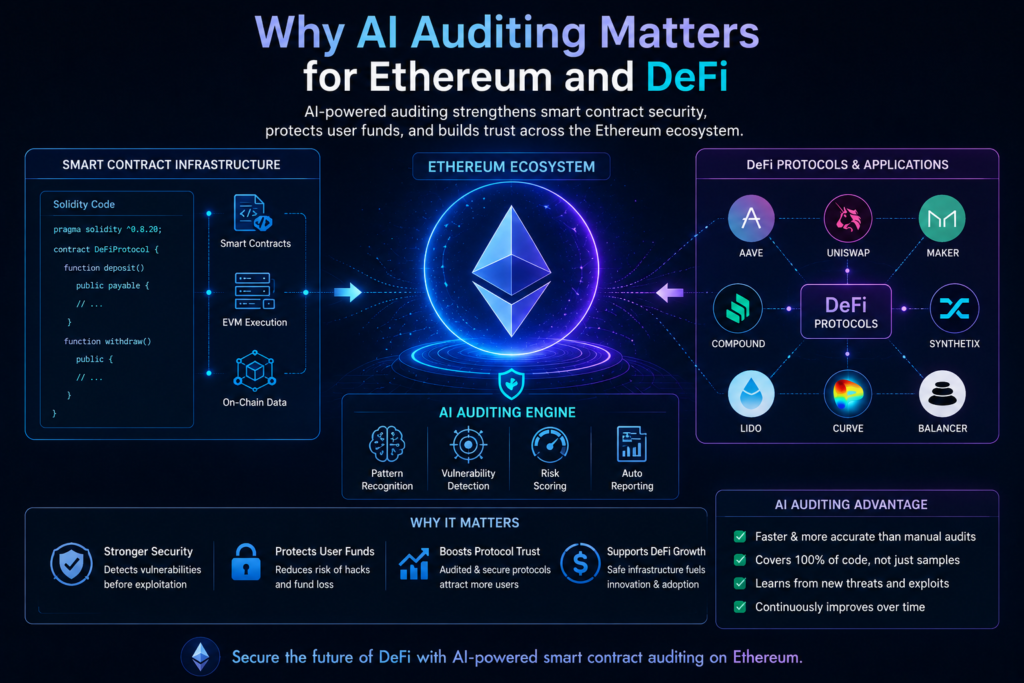
AI-assisted auditing could become especially important for ecosystems like Ethereum, where smart contracts power thousands of decentralized applications and Ethereum market and ecosystem growth.
The Ethereum ecosystem supports:
- DeFi protocols
- NFT platforms
- DAOs
- staking systems
- lending applications
- tokenized assets
- Layer 2 infrastructure
As the ecosystem expands, security complexity grows rapidly.
Traditional manual audits are still highly valuable, but they face scalability limitations due to:
- increasing code complexity
- rising developer activity
- shorter deployment cycles
- expanding attack surfaces
AI-powered auditing tools may help solve some of these scalability challenges by introducing continuous automated monitoring during development.
This shift aligns with broader trends in software engineering where testing and validation are becoming integrated directly into developer workflows rather than occurring only before deployment.
Security Is Moving Earlier Into Developer Workflows
One of the more important aspects of CertiK’s approach is its attempt to integrate security directly into the coding process itself.
Traditionally, security audits occur near the end of development. This often leads to:
- delayed launches
- expensive fixes
- rushed remediation
- overlooked vulnerabilities
CertiK’s open-source integrations for AI coding agents aim to change this workflow.
Developers can now receive real-time security feedback while actively writing code.
This proactive approach could help:
- reduce exploit risks earlier
- lower auditing costs
- improve code quality
- shorten deployment timelines
In many ways, Web3 security may begin evolving toward a “continuous security” model similar to modern DevSecOps practices used in traditional software engineering.
Can AI Replace Human Smart Contract Auditors?
Despite advancements in automation, AI is unlikely to fully replace human auditors anytime soon.
Smart contract security often requires:
- contextual reasoning
- economic understanding
- governance analysis
- protocol-level thinking
- exploit creativity
AI systems are highly effective at:
- pattern recognition
- repetitive scanning
- vulnerability classification
- anomaly detection
However, sophisticated exploits frequently involve nuanced attack vectors that require human judgment and deeper architectural understanding.
CertiK itself has clarified that its AI Auditor is intended to complement human experts rather than replace them entirely.
This hybrid model is likely the most realistic future for Web3 security:
- AI handles scalability and automation
- humans handle complex reasoning and strategic review
AI Auditing vs Traditional Smart Contract Audits
| AI-Assisted Auditing | Traditional Manual Auditing |
|---|---|
| Faster analysis | Slower review process |
| Scalable for large ecosystems | Limited by human resources |
| Continuous monitoring possible | Usually periodic reviews |
| Lower operational cost | More expensive |
| Effective for known patterns | Better for complex logic analysis |
| May produce false positives | Stronger contextual judgment |
| Good for early-stage detection | Better for advanced exploit discovery |
Rather than competing directly, these approaches are increasingly becoming complementary layers within modern blockchain security strategies and institutional blockchain adoption
.
Challenges and Limitations of AI Security Systems
While AI auditing tools are promising, they also face important limitations.
False Positives
Even advanced AI systems can incorrectly flag harmless code as dangerous, creating unnecessary developer friction.
AI Hallucinations
Machine learning systems occasionally misinterpret logic or generate inaccurate conclusions, especially when handling highly complex smart contract architectures.
Unknown Exploit Patterns
AI models are generally strongest when detecting vulnerabilities similar to previously known exploit patterns.
Completely new attack methods may still bypass automated detection systems.
Overreliance on Automation
One potential industry risk is developers becoming overly dependent on AI-generated security reports without sufficient manual review.
Security automation should improve human workflows — not replace critical thinking entirely.
Why Institutional Adoption Could Increase Demand for AI Security
As tokenization and institutional blockchain adoption continue accelerating, security expectations are becoming significantly higher.
Large financial institutions entering blockchain markets require:
- stronger auditing standards
- scalable infrastructure
- automated compliance monitoring
- enterprise-grade security systems
This is particularly relevant as companies explore:
- tokenized securities
- real-world assets (RWAs)
- blockchain settlement systems
- decentralized identity solutions
Institutions are unlikely to trust blockchain infrastructure at scale without major improvements in smart contract security.
AI-assisted auditing may become one of the foundational layers supporting this transition.
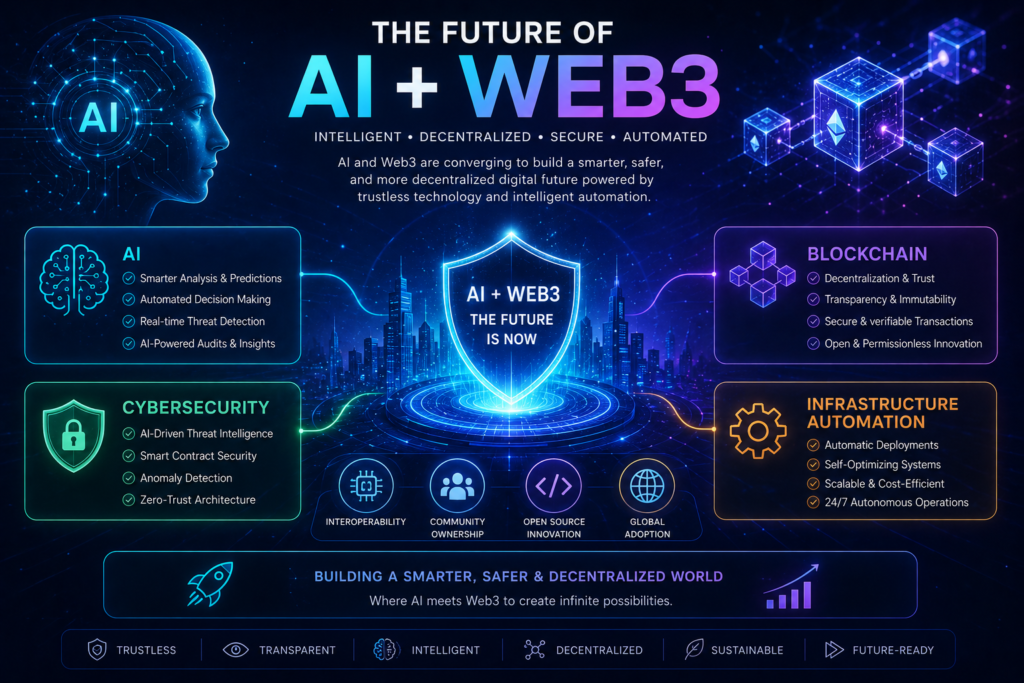
The Bigger Trend: AI and Web3 Infrastructure Convergence
CertiK’s launch reflects a broader industry trend where artificial intelligence is becoming increasingly integrated into blockchain infrastructure.
AI is already influencing:
- trading systems
- blockchain analytics
- fraud detection
- compliance monitoring
- governance systems
- developer tooling
- cybersecurity automation
As decentralized ecosystems continue scaling globally, AI may become essential for managing operational complexity across Web3 networks and blockchain cybersecurity concerns.
The intersection between AI and blockchain infrastructure is likely to remain one of the most important areas of innovation over the next several years.
Final Thoughts
CertiK’s AI Auditor represents a meaningful evolution in how blockchain security may be approached moving forward.
By combining automated vulnerability detection with multi-stage validation systems and developer workflow integrations, the platform attempts to solve one of Web3’s most persistent challenges: scalable security.
Its reported 88.6% detection accuracy suggests AI-assisted auditing tools are becoming increasingly practical for real-world blockchain environments and risks surrounding tokenized finance.
However, AI alone will not eliminate Web3 exploits.
The future of blockchain security will likely depend on a hybrid model where:
- AI improves speed and scalability
- human experts provide contextual analysis and strategic oversight
As decentralized applications continue growing in complexity, the demand for intelligent security infrastructure will only increase.
For the broader Web3 ecosystem, innovations like AI-assisted auditing could become critical in building safer, more resilient decentralized systems.
FAQ
What is AI smart contract auditing?
AI smart contract auditing uses machine learning and automated analysis tools to identify vulnerabilities, coding errors, and exploit risks within blockchain smart contracts.
Can AI fully replace blockchain security auditors?
No. AI can automate detection and improve efficiency, but human auditors are still essential for understanding complex logic, governance risks, and sophisticated exploit strategies.
Why are smart contract audits important?
Smart contract audits help identify vulnerabilities before deployment, reducing the risk of hacks, financial losses, and protocol failures.
What makes CertiK a major blockchain security company?
CertiK is widely recognized for its blockchain auditing services, security monitoring systems, and smart contract analysis tools used across multiple Web3 ecosystems.
Why is Web3 security becoming more important?
As blockchain adoption grows across DeFi, NFTs, tokenization, and institutional finance, the financial and operational risks associated with smart contract vulnerabilities continue increasing.