







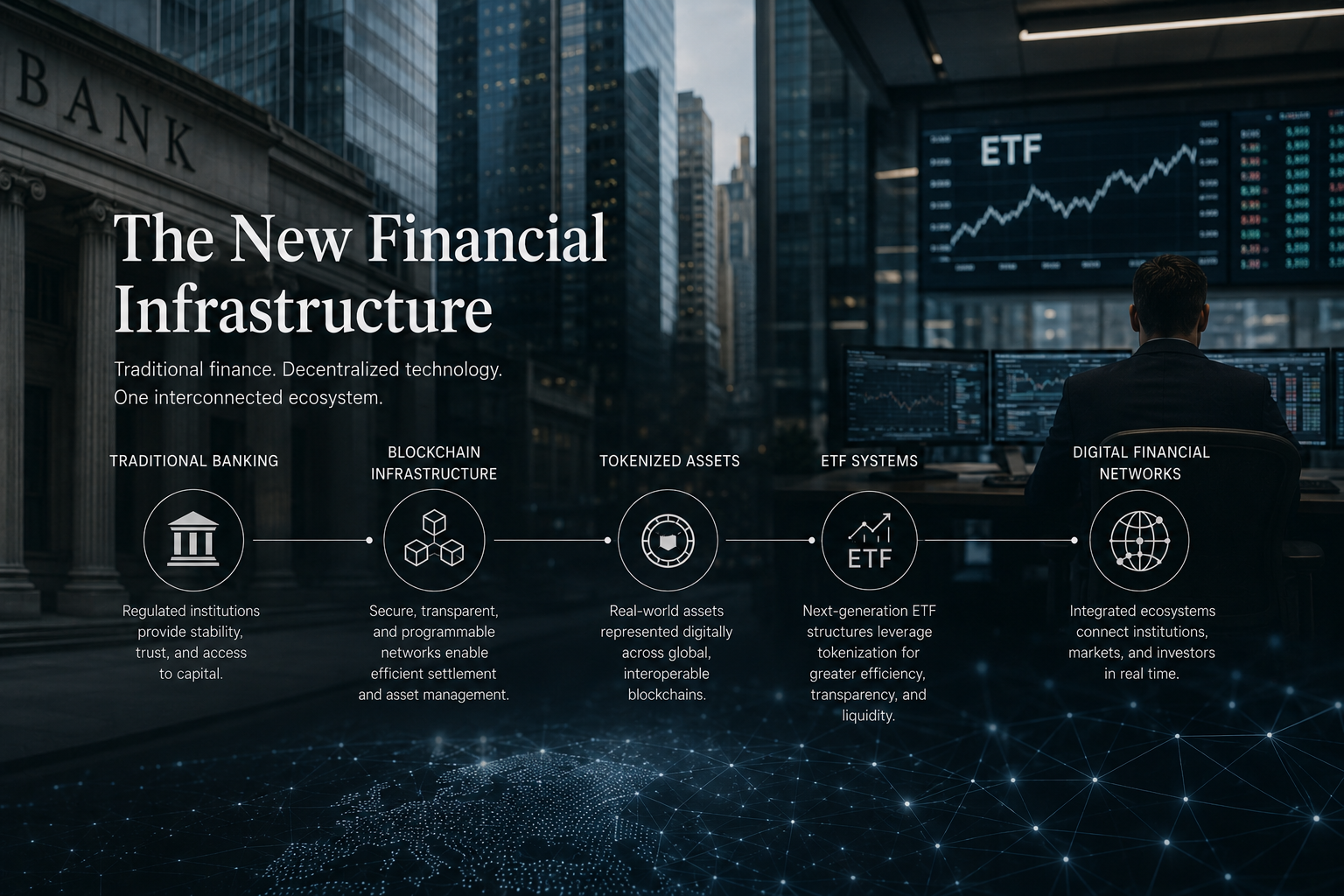
Tokenization is rapidly becoming one of the most closely watched developments in modern finance. Major institutions, asset managers, banks, and regulators are increasingly exploring how blockchain technology could modernize traditional financial systems through digitally tokenized assets.
- What Is Tokenization in Finance?
- Why JPMorgan Believes Tokenization Matters
- Why ETFs Could Become a Major Tokenization Use Case
- Why Institutions Are Moving Slowly Despite the Hype
- Why Tokenized Finance Could Create Faster Markets — and Faster Crises
- Why Blockchain Infrastructure Is Becoming Strategic
- The Role of AI and Smart Contract Security
- Why Tokenization Could Become a Multi-Trillion-Dollar Market
- The Future May Be Hybrid Financial Infrastructure
- Final Thoughts
- FAQ
Among the largest financial institutions actively researching this transition is JPMorgan Chase, which believes tokenization could significantly transform the global funds industry over the coming decade.
According to senior executives involved in the bank’s ETF and blockchain initiatives, tokenized financial systems may eventually improve:
- settlement efficiency
- liquidity management
- market accessibility
- operational costs
- asset interoperability
However, despite growing momentum, large-scale deployment remains years away due to:
- infrastructure limitations
- regulatory complexity
- security concerns
- operational integration challenges
The broader financial industry is increasingly moving toward blockchain-based systems — but the transition is expected to be gradual rather than immediate.
What Is Tokenization in Finance?
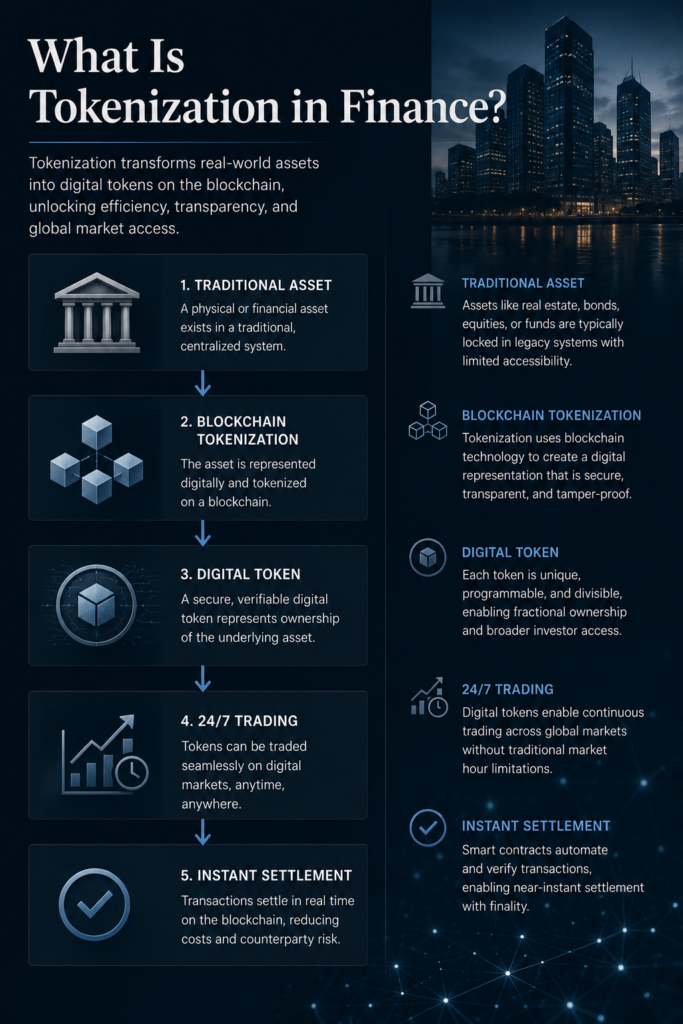
Tokenization refers to the process of converting traditional financial assets into blockchain-based digital tokens.
Assets that can potentially be tokenized include:
- stocks
- bonds
- treasury products
- real estate
- ETFs
- commodities
- money market funds
Instead of relying solely on traditional financial infrastructure, tokenized assets can move across blockchain networks with:
- programmable ownership
- near-instant settlement
- 24/7 market accessibility
- automated transaction logic
Many institutions view tokenization as a potential modernization layer for global financial infrastructure.
At the same time, growing discussions around tokenized financial infrastructure are also raising concerns about market stability and systemic risk.
The debate now centers not on whether tokenization will expand — but on how safely and efficiently it can scale.
Why JPMorgan Believes Tokenization Matters
JPMorgan has been actively investing in blockchain infrastructure through its digital asset division focused on institutional blockchain systems.
The bank believes tokenization could eventually improve several major areas of finance, including:
- ETF operations
- collateral management
- settlements
- cross-border transfers
- liquidity efficiency
- treasury infrastructure
Traditional financial markets still operate with many structural inefficiencies.
For example:
- settlements may take multiple days
- markets close overnight and on weekends
- intermediaries increase operational complexity
- cross-border systems remain fragmented
Tokenized systems could potentially reduce many of these inefficiencies by enabling:
- faster settlement
- continuous trading
- automated execution
- programmable financial workflows
This broader institutional movement toward blockchain adoption is increasingly shaping the future of financial infrastructure globally.
Why ETFs Could Become a Major Tokenization Use Case
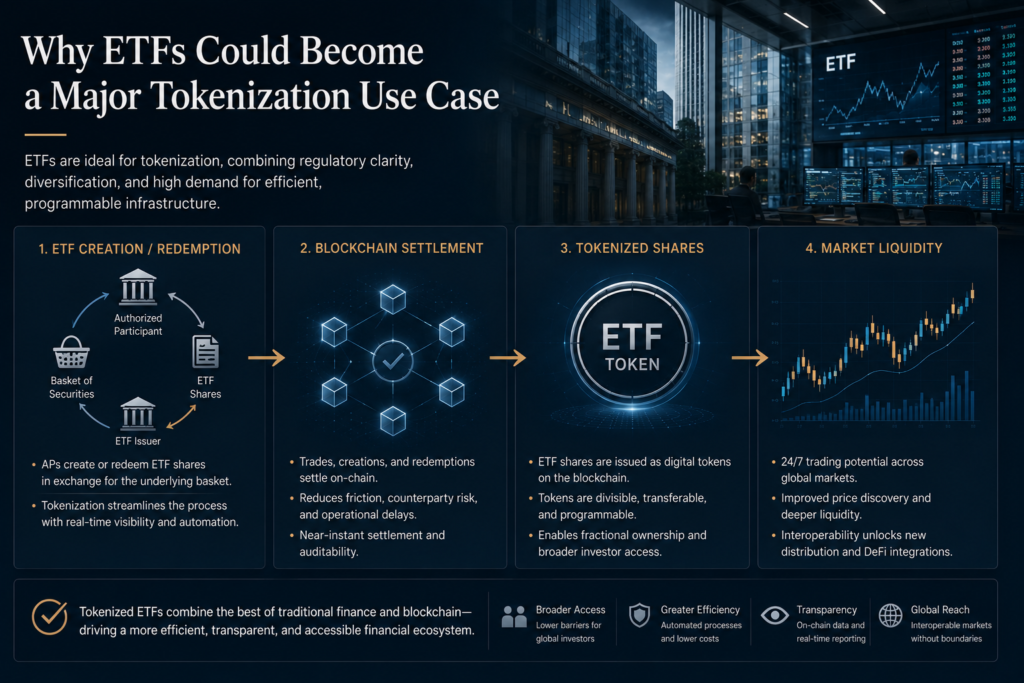
Exchange-traded funds (ETFs) are considered one of the strongest candidates for tokenization because they already operate within highly structured and liquid financial ecosystems.
Tokenized ETFs could eventually allow:
- near-instant settlement
- fractional ownership
- 24/7 trading
- automated redemptions
- blockchain-based collateral management
This would represent a major shift compared to traditional financial markets, which still operate within limited trading windows and slower settlement cycles.
The rise of tokenized ETF infrastructure also reflects broader convergence between:
- traditional finance
- blockchain infrastructure
- digital asset markets
This transformation is happening alongside increasing institutional interest in blockchain ecosystems and digital asset infrastructure.
Why Institutions Are Moving Slowly Despite the Hype
Despite strong interest, most major financial institutions remain cautious about large-scale blockchain integration.
There are several reasons for this.
Regulatory Complexity
Financial markets operate under strict regulatory frameworks involving:
- securities laws
- custody requirements
- anti-money laundering rules
- settlement standards
- compliance obligations
Integrating blockchain systems into regulated financial markets requires extensive coordination between:
- banks
- regulators
- exchanges
- infrastructure providers
Infrastructure Challenges
Traditional financial infrastructure was not originally designed for blockchain interoperability.
Modernizing global settlement systems requires:
- technical integration
- operational testing
- cybersecurity safeguards
- scalability improvements
This process may take years rather than months.
Security Risks
As financial systems become increasingly digitized and automated, cybersecurity risks become more significant.
The broader blockchain industry continues facing major DeFi security risks tied to:
- smart contract exploits
- bridge vulnerabilities
- governance attacks
- operational failures
Institutions are unlikely to move aggressively into tokenized systems without strong security guarantees.
Why Tokenized Finance Could Create Faster Markets — and Faster Crises
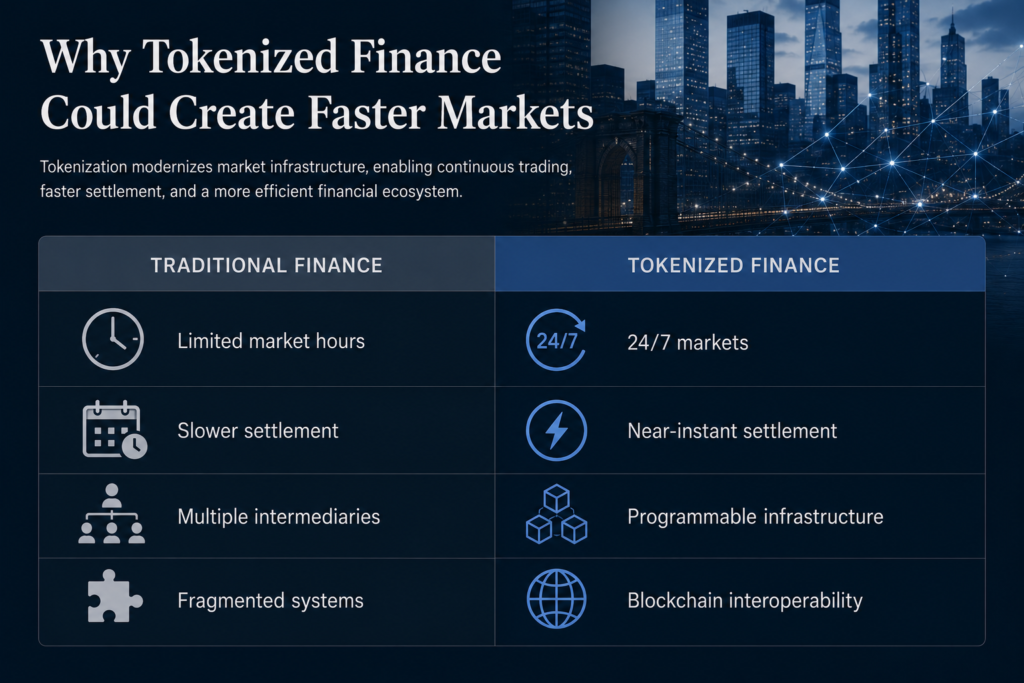
One of the biggest advantages of tokenized finance is speed.
Blockchain systems can settle transactions almost instantly compared to traditional financial infrastructure.
However, this efficiency also introduces potential systemic risks.
In traditional finance, slower settlement cycles can sometimes provide:
- liquidity management buffers
- exposure netting
- intervention opportunities
- crisis coordination time
Highly automated blockchain systems may accelerate:
- liquidations
- market contagion
- collateral stress
- volatility transmission
This is one reason organizations like the IMF have warned that tokenized systems could potentially amplify financial instability during periods of market stress.
Why Blockchain Infrastructure Is Becoming Strategic
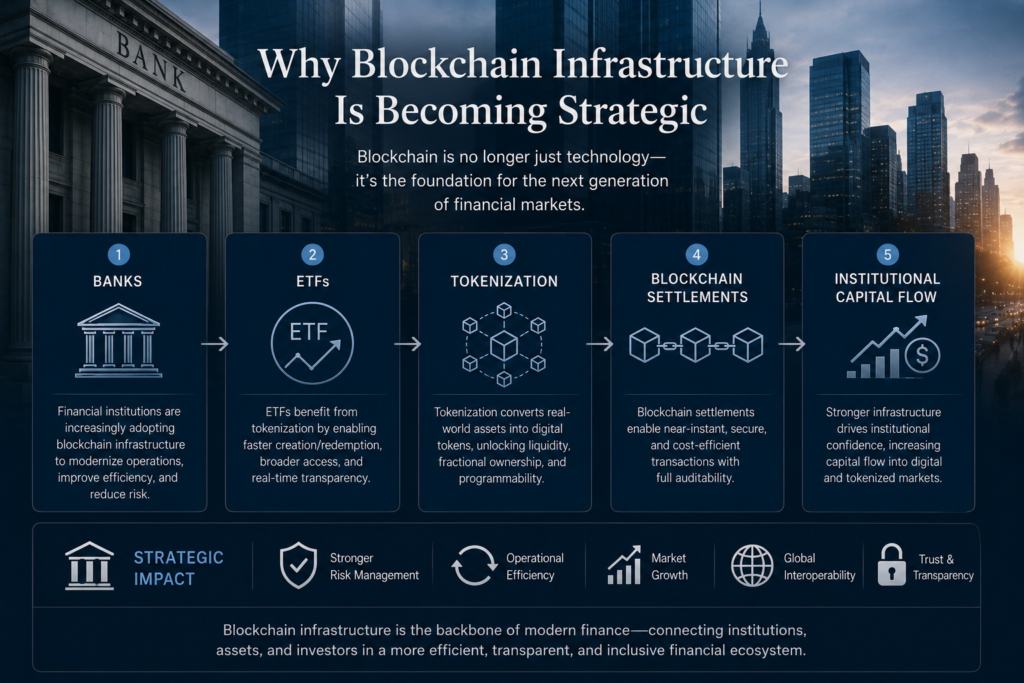
The rise of tokenized finance reflects a broader transformation happening across global digital infrastructure.
Blockchain systems are increasingly being explored for:
- settlements
- payments
- collateralization
- treasury systems
- identity infrastructure
- cybersecurity resilience
Even discussions surrounding Bitcoin’s role in cybersecurity infrastructure show how decentralized systems are gradually entering strategic policy conversations.
This suggests blockchain infrastructure is evolving beyond speculative markets into a larger component of digital financial architecture.
The Role of AI and Smart Contract Security

As tokenized financial systems become more complex, automation and smart contract security will become increasingly important.
Financial infrastructure operating on blockchain networks depends heavily on:
- secure code execution
- vulnerability prevention
- operational reliability
- real-time monitoring
Modern smart contract security systems are increasingly integrating AI-assisted auditing tools to improve infrastructure resilience:
Without strong security standards, institutional adoption of tokenized finance may remain limited.
Why Tokenization Could Become a Multi-Trillion-Dollar Market
Industry analysts increasingly believe tokenized assets could eventually represent trillions of dollars in market value.
Potential growth areas include:
- tokenized treasuries
- digital bonds
- real estate tokenization
- institutional DeFi
- tokenized ETFs
- private market assets
Supporters argue tokenization could improve:
- market accessibility
- liquidity efficiency
- operational speed
- collateral mobility
However, adoption will likely depend on:
- regulation
- infrastructure maturity
- institutional trust
- interoperability
- security standards
The financial industry appears to be entering a transitional phase where experimentation is accelerating, but mass adoption is still developing.
The Future May Be Hybrid Financial Infrastructure
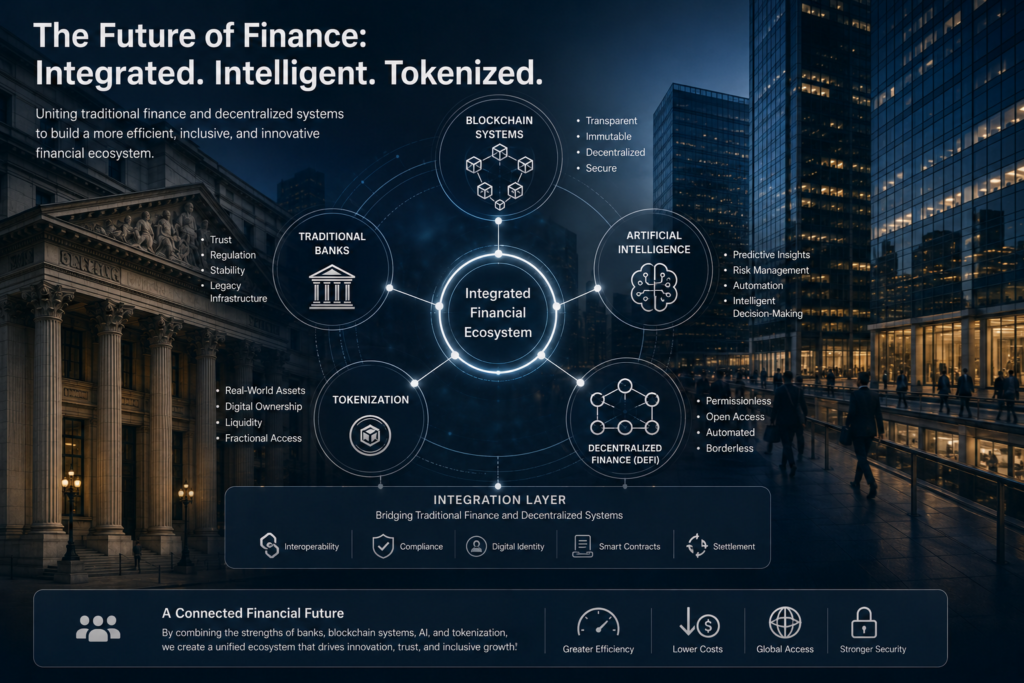
Rather than completely replacing traditional finance, blockchain infrastructure may ultimately evolve into a hybrid system combining:
- traditional financial institutions
- tokenized settlement layers
- decentralized infrastructure
- regulated custody systems
- automated blockchain workflows
This convergence is already becoming visible across:
- stablecoins
- institutional custody
- blockchain settlements
- tokenized assets
- crypto-backed lending systems
For example, growing interest in crypto-backed financial infrastructure is already influencing lending and mortgage markets:
The future of finance may involve a blend of:
- centralized oversight
- decentralized infrastructure
- blockchain automation
- institutional capital
Final Thoughts
JPMorgan’s outlook reflects a growing consensus across the financial industry:
tokenization is likely to become an important part of future financial infrastructure.
However, the transformation will probably happen gradually rather than suddenly.
Large-scale tokenization requires:
- secure infrastructure
- regulatory clarity
- operational integration
- institutional trust
- scalable blockchain systems
While the technology promises faster and more efficient markets, it also introduces new forms of risk that regulators and institutions are still learning to manage.
The next decade may ultimately determine whether tokenized finance becomes:
- a niche blockchain experiment
or:
- a foundational layer of global financial infrastructure.
FAQ
What is tokenization in finance?
Tokenization is the process of converting traditional financial assets into blockchain-based digital tokens.
Why are banks interested in tokenization?
Banks believe tokenization could improve settlement speed, operational efficiency, liquidity management, and market accessibility.
What are tokenized ETFs?
Tokenized ETFs are blockchain-based versions of exchange-traded funds that may eventually support programmable ownership and faster settlement.
What are the risks of tokenized finance?
Major risks include cybersecurity vulnerabilities, regulatory uncertainty, smart contract failures, and systemic market instability.
Why is blockchain infrastructure important for finance?
Blockchain infrastructure may improve financial efficiency, automation, interoperability, and global market accessibility across modern financial systems.