







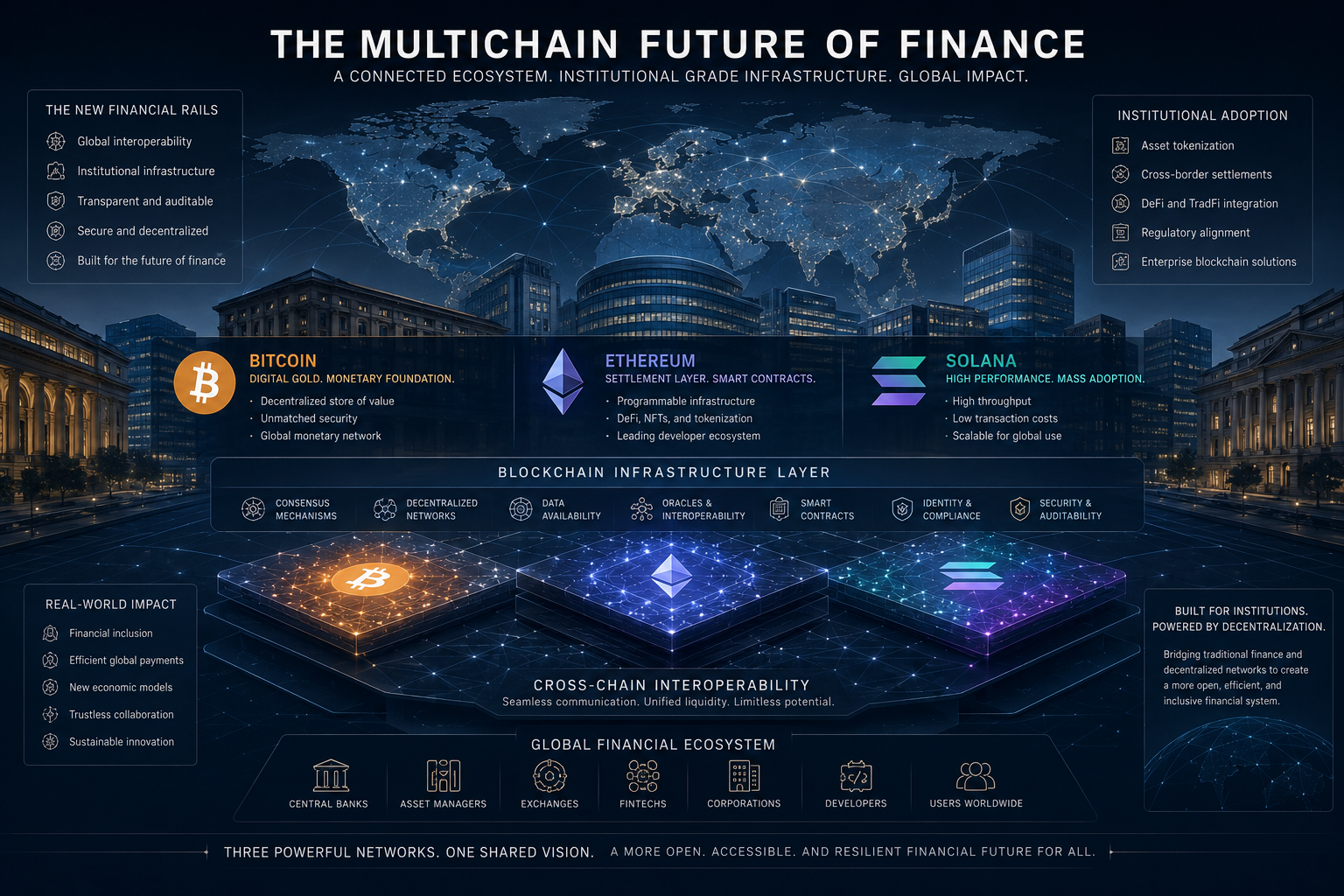
The cryptocurrency industry in 2026 has evolved far beyond speculative trading and meme-driven hype cycles. Today, blockchain networks are increasingly being integrated into financial infrastructure, digital payments, cybersecurity systems, decentralized applications, and institutional investment strategies.
- Why Cryptocurrency Ecosystems Matter
- Why Market Capitalization Still Matters
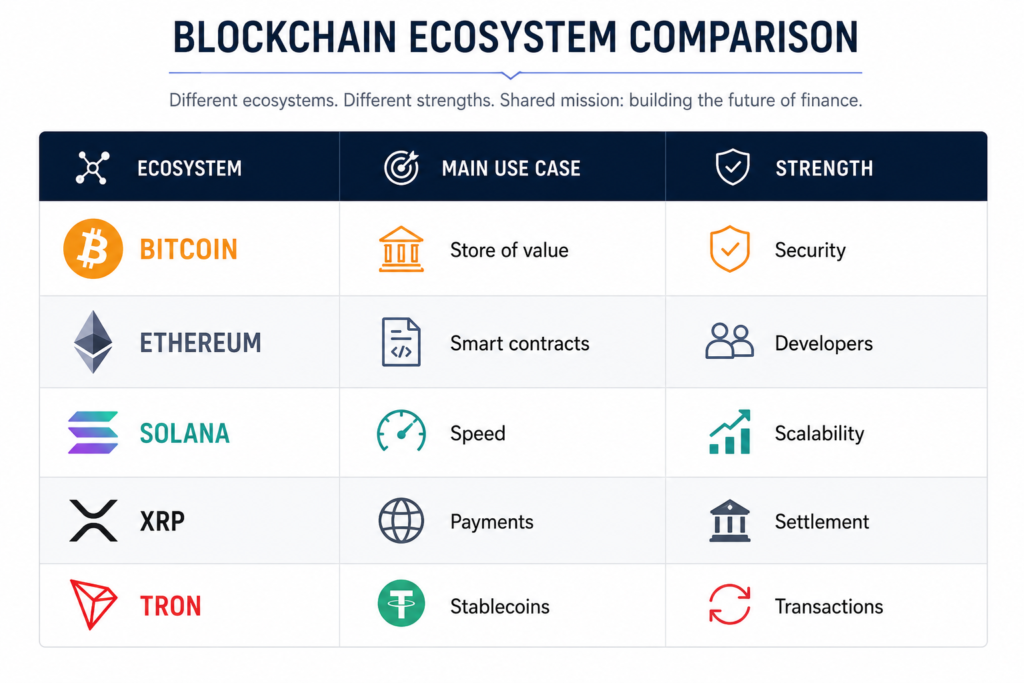
- 1. Bitcoin (BTC) — The Foundation of Digital Scarcity
- 2. Ethereum (ETH) — The Core Infrastructure Layer of Web3
- 3. Tether (USDT) — The Backbone of Stablecoin Liquidity
- 4. BNB — Exchange Ecosystem Expansion
- 5. XRP — Cross-Border Payment Infrastructure
- 6. USD Coin (USDC) — Institutional Stablecoin Infrastructure
- 7. Solana (SOL) — High-Speed Blockchain Infrastructure
- 8. Tron (TRX) — Stablecoin Transaction Network
- 9. Dogecoin (DOGE) — Community-Driven Cryptocurrency
- 10. Cardano (ADA) — Research-Focused Blockchain Development
- How Institutional Adoption Is Reshaping Crypto
- Risks Investors Should Understand
- Why Blockchain Ecosystems Are Becoming More Important
- Final Thoughts
- FAQ
As governments, corporations, and financial institutions continue exploring blockchain technology, a small group of cryptocurrency ecosystems has emerged as dominant players shaping the future of the digital economy.
Rather than focusing purely on short-term price movements, investors and industry observers are paying closer attention to:
- network adoption
- developer activity
- infrastructure growth
- scalability
- security
- institutional participation
- real-world utility
Understanding how these ecosystems function is becoming increasingly important for anyone entering the Web3 space.
Why Cryptocurrency Ecosystems Matter
Not all cryptocurrencies serve the same purpose.
Some blockchain networks focus on:
- decentralized finance (DeFi)
- smart contracts
- payments
- stablecoins
- infrastructure
- digital identity
- tokenization
Others function primarily as decentralized monetary systems or settlement layers.
As blockchain adoption expands globally, the competition between ecosystems is increasingly centered around:
- scalability
- developer adoption
- security
- decentralization
- regulatory positioning
- institutional integration
The strongest projects are no longer defined solely by market hype but by their ability to support long-term infrastructure growth.
Why Market Capitalization Still Matters
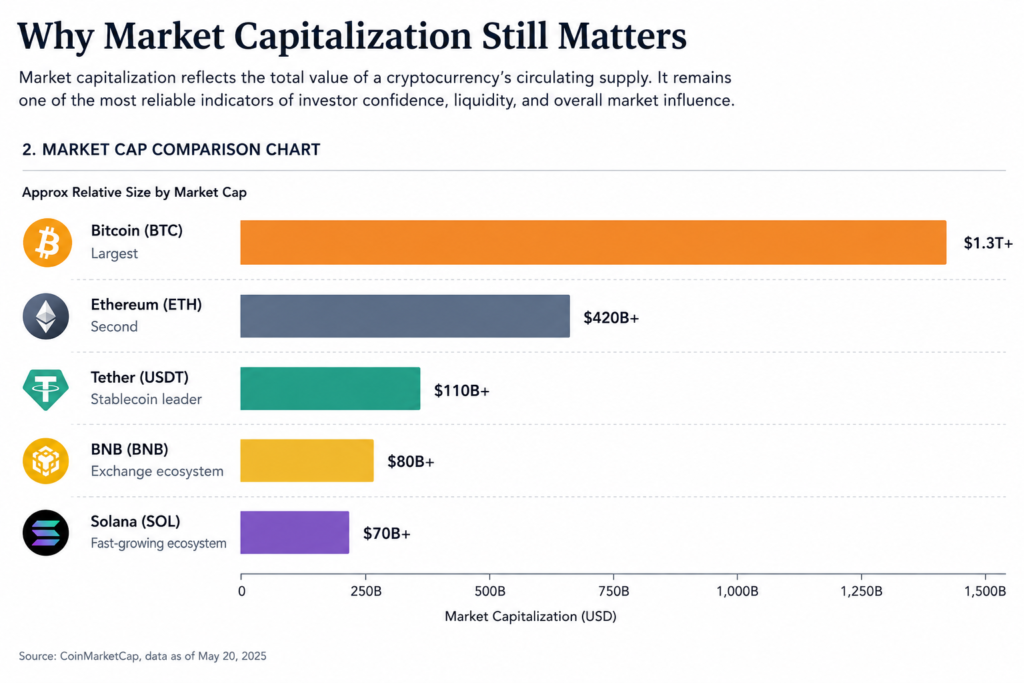
Market capitalization remains one of the clearest indicators of:
- network maturity
- liquidity
- investor confidence
- institutional participation
- ecosystem stability
Larger ecosystems generally benefit from:
- deeper liquidity
- stronger infrastructure
- more active developer communities
- wider exchange support
- higher institutional trust
However, market cap alone should never be the only factor used to evaluate blockchain projects.
Technology, adoption, governance, scalability, and security are equally important.
1. Bitcoin (BTC) — The Foundation of Digital Scarcity
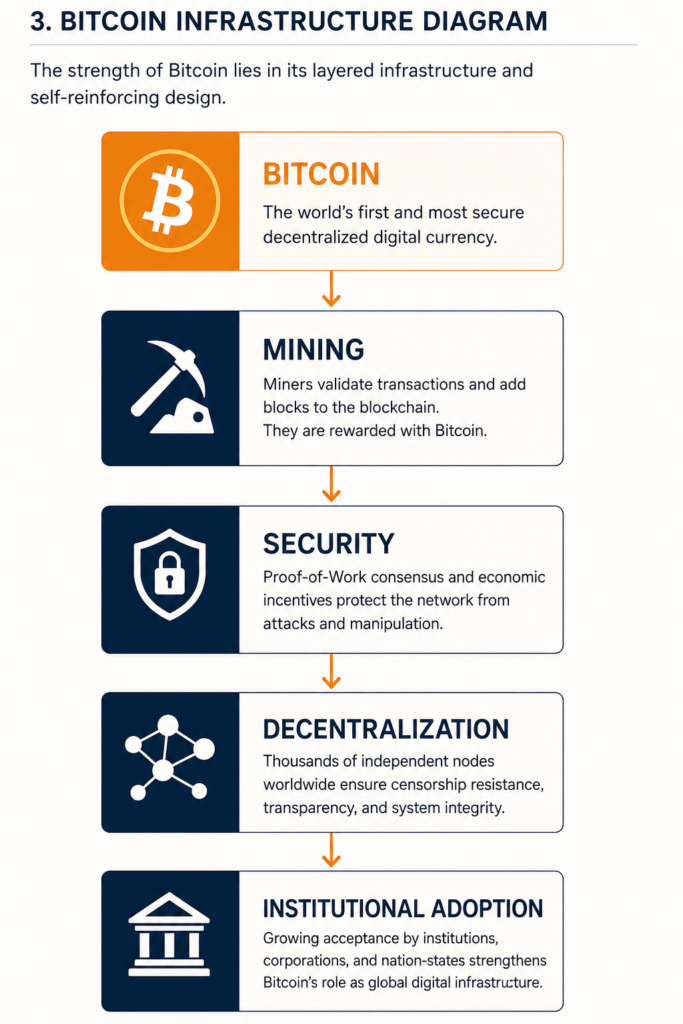
Bitcoin remains the largest and most recognized cryptocurrency ecosystem globally.
Originally introduced as a decentralized peer-to-peer monetary system, Bitcoin has increasingly evolved into a strategic digital asset used by:
- institutions
- hedge funds
- corporations
- sovereign entities
- long-term investors
Its fixed supply of 21 million coins continues to support its reputation as a scarce digital asset.
itcoin’s proof-of-work system also plays a critical role in its long-term security model. Discussions around Bitcoin’s role in cybersecurity infrastructure are increasingly shaping how governments and institutions evaluate decentralized systems:
Bitcoin’s ecosystem continues benefiting from:
- strong network security
- institutional ETF adoption
- growing regulatory clarity
- global liquidity
- resilient infrastructure
Despite volatility, Bitcoin remains the dominant gateway into the broader crypto economy.
2. Ethereum (ETH) — The Core Infrastructure Layer of Web3
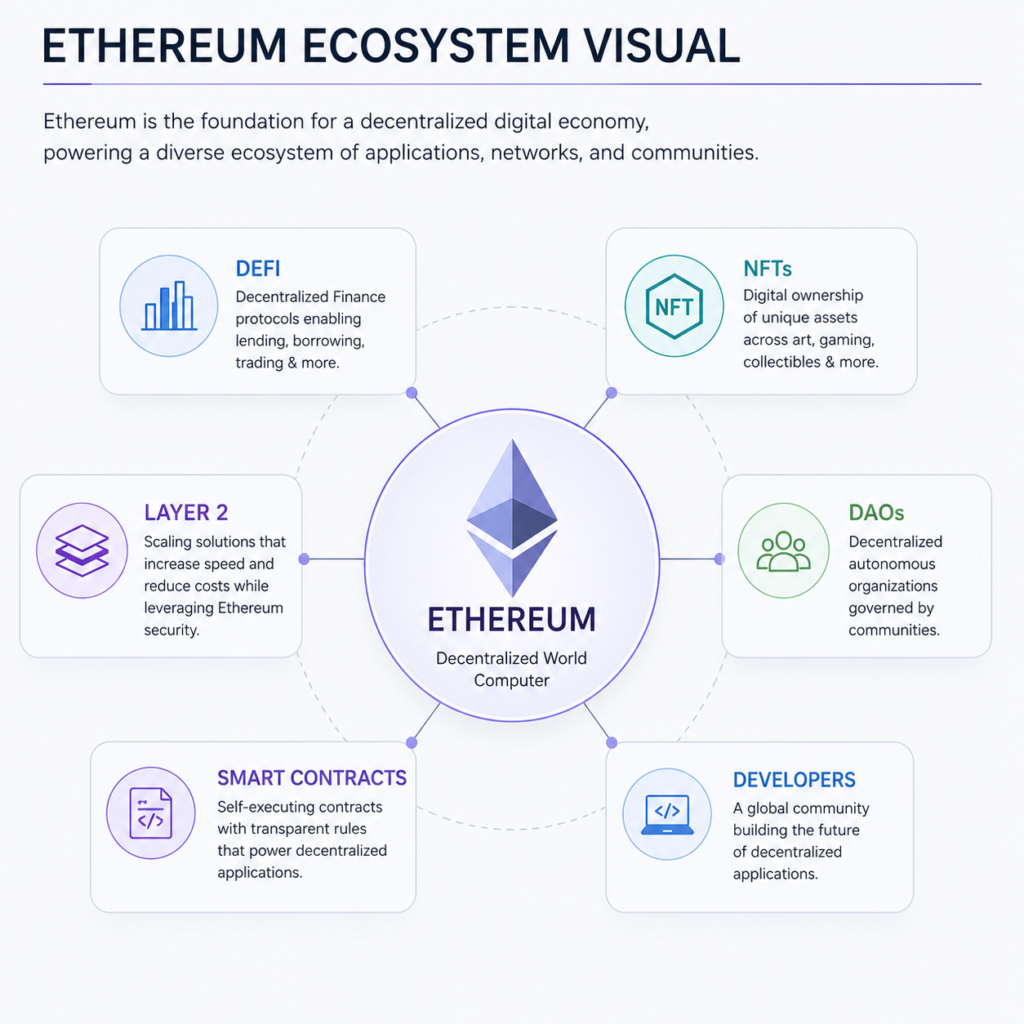
Ethereum remains the leading smart contract ecosystem powering much of the decentralized internet.
The network supports:
- DeFi protocols
- NFTs
- DAOs
- tokenization
- decentralized applications
- Layer 2 scaling solutions
Ethereum’s developer ecosystem remains one of the largest in blockchain technology, giving it a major advantage in long-term infrastructure growth.
As smart contract complexity increases, blockchain security has become increasingly important across the Ethereum ecosystem. Modern smart contract security systems are now integrating AI-assisted auditing tools to reduce vulnerabilities and improve developer workflows:
Ethereum’s transition toward scalability improvements and Layer 2 expansion continues strengthening its role as foundational Web3 infrastructure.
3. Tether (USDT) — The Backbone of Stablecoin Liquidity
Tether remains the most widely used stablecoin in the crypto industry.
Unlike volatile cryptocurrencies, USDT is designed to maintain a value close to the U.S. dollar, making it essential for:
- trading liquidity
- cross-border transfers
- DeFi participation
- exchange settlement
- emerging market payments
Its role within global crypto liquidity infrastructure remains significant despite ongoing regulatory discussions surrounding stablecoin reserves and transparency.
Many blockchain ecosystems depend heavily on USDT-based liquidity to operate efficiently.
4. BNB — Exchange Ecosystem Expansion
BNB has evolved from a utility token into a broader blockchain ecosystem supporting:
- decentralized applications
- DeFi platforms
- NFT marketplaces
- staking systems
- exchange infrastructure
Its growth has largely been tied to the expansion of the Binance ecosystem and its global trading activity.
BNB’s ecosystem benefits from:
- strong retail adoption
- high transaction activity
- large user base
- exchange integration
However, regulatory developments continue playing a major role in shaping its long-term outlook.
5. XRP — Cross-Border Payment Infrastructure
XRP focuses heavily on international payments and settlement efficiency.
The ecosystem aims to improve:
- cross-border transfers
- banking settlements
- liquidity management
- payment infrastructure
Its relatively fast settlement speeds and lower transaction costs have attracted attention from financial institutions exploring blockchain-based payment systems.
XRP’s future growth may depend heavily on:
- regulatory clarity
- institutional integration
- global payment partnerships
- financial infrastructure adoption
6. USD Coin (USDC) — Institutional Stablecoin Infrastructure
USDC has positioned itself as one of the more institutionally focused stablecoins within the digital asset market.
The ecosystem emphasizes:
- regulatory compliance
- transparency
- reserve disclosures
- institutional integration
USDC is increasingly used across:
- tokenized financial systems
- institutional DeFi
- blockchain settlements
- enterprise infrastructure
As discussions around institutional blockchain adoption continue accelerating, stablecoins like USDC are becoming increasingly important:
Stablecoins may eventually become foundational components of blockchain-based financial infrastructure globally.
7. Solana (SOL) — High-Speed Blockchain Infrastructure
Solana has gained significant attention due to its:
- fast transaction speeds
- low fees
- scalable architecture
- growing developer ecosystem
The network has become increasingly active across:
- DeFi applications
- NFT ecosystems
- gaming projects
- consumer blockchain applications
Its high-performance infrastructure has helped position Solana as a major competitor within the smart contract sector.
However, scalability and decentralization debates remain important topics surrounding the ecosystem.
8. Tron (TRX) — Stablecoin Transaction Network
Tron has established itself as one of the largest networks for stablecoin transfers globally.
The ecosystem processes substantial USDT transaction volume due to:
- low fees
- high throughput
- active user adoption
Tron’s infrastructure is particularly influential in regions where stablecoins are heavily used for remittances and payments.
Despite criticism around centralization concerns, Tron continues maintaining strong transactional activity within the broader crypto economy.
9. Dogecoin (DOGE) — Community-Driven Cryptocurrency
Dogecoin remains one of the most recognizable community-driven cryptocurrencies in the market.
Originally launched as a meme-based project, DOGE has continued surviving multiple market cycles due to:
- strong online communities
- cultural relevance
- celebrity attention
- widespread retail recognition
While Dogecoin lacks some of the advanced infrastructure found in smart contract ecosystems, its branding and community engagement continue giving it market visibility.
10. Cardano (ADA) — Research-Focused Blockchain Development
Cardano differentiates itself through a research-driven development approach emphasizing:
- scalability
- sustainability
- academic peer review
- formal verification methods
The ecosystem focuses heavily on long-term blockchain infrastructure and governance systems.
Cardano’s slower development pace has received criticism from some market participants, but supporters argue that its methodical approach may improve long-term resilience.
How Institutional Adoption Is Reshaping Crypto
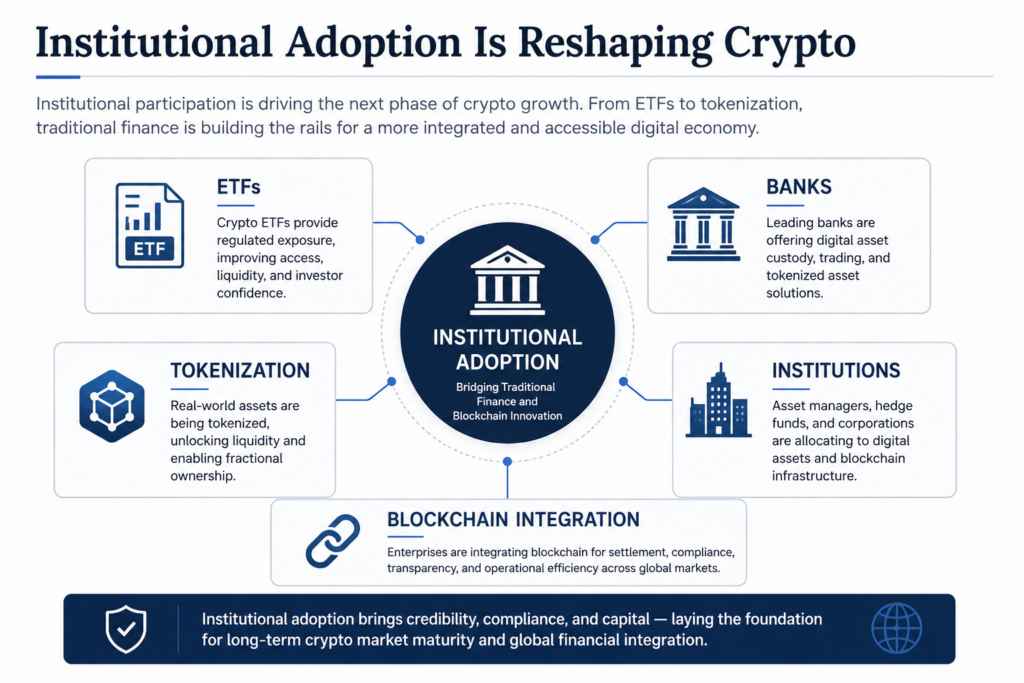
One of the biggest shifts in the cryptocurrency industry is the rapid increase in institutional participation.
Major financial firms are increasingly exploring:
- Bitcoin ETFs
- tokenized assets
- blockchain settlement systems
- digital custody
- stablecoin infrastructure
This institutional movement is changing how blockchain ecosystems are evaluated.
Projects with:
- stronger infrastructure
- better security
- regulatory adaptability
- scalable architecture
are attracting greater long-term attention.
At the same time, concerns around digital asset infrastructure risks continue influencing how regulators and institutions approach blockchain adoption:
Risks Investors Should Understand
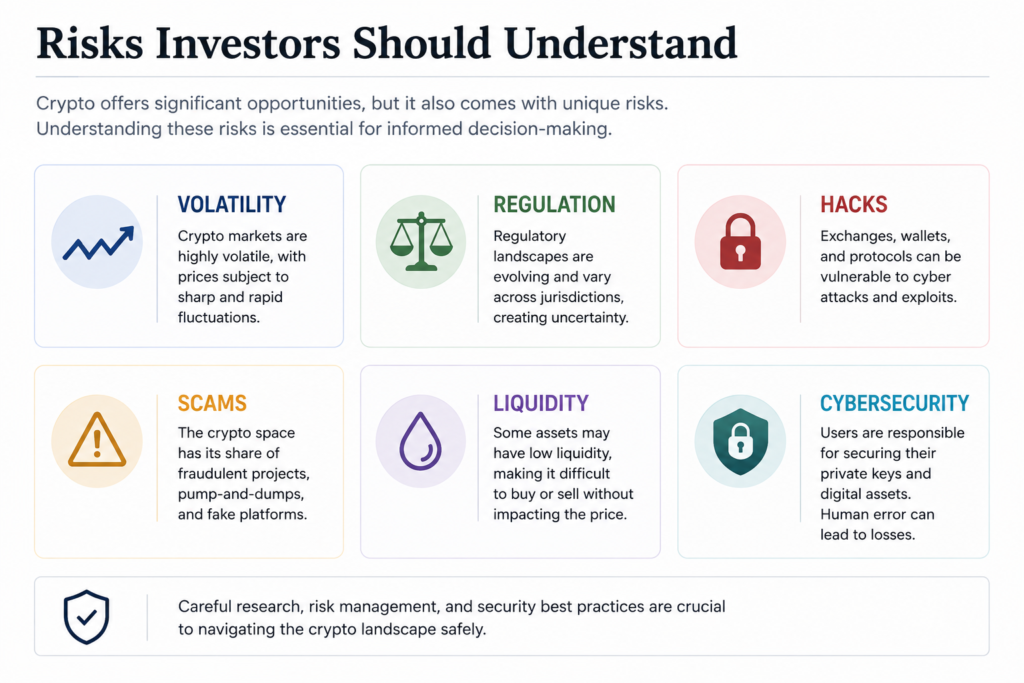
Despite long-term growth potential, cryptocurrencies remain highly volatile and risky.
Key risks include:
- market volatility
- regulatory uncertainty
- liquidity issues
- exchange failures
- smart contract exploits
- cybersecurity breaches
The broader Web3 ecosystem continues facing major DeFi security risks related to protocol vulnerabilities and infrastructure weaknesses:
Understanding these risks is essential before participating in digital asset markets.
Why Blockchain Ecosystems Are Becoming More Important
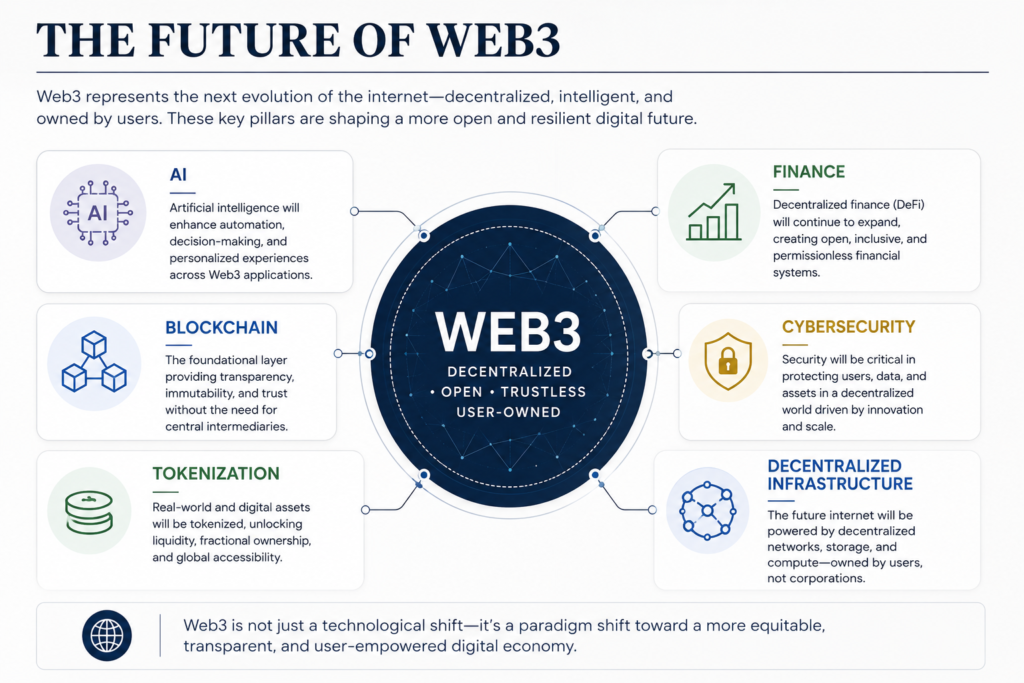
The crypto industry is gradually evolving from speculative markets into broader infrastructure systems supporting:
- decentralized finance
- digital payments
- tokenization
- cybersecurity
- global settlement
- Web3 applications
As adoption grows, blockchain ecosystems with:
- strong developer activity
- scalable infrastructure
- institutional trust
- resilient security
are likely to remain dominant over the long term.
The future of crypto will likely be shaped less by hype cycles and more by real-world utility and infrastructure integration.
Final Thoughts
Cryptocurrency ecosystems in 2026 are becoming increasingly interconnected with finance, infrastructure, cybersecurity, and institutional technology systems.
While Bitcoin and Ethereum remain dominant leaders, other ecosystems such as Solana, XRP, Tron, BNB, and Cardano continue competing across different sectors of the blockchain economy.
Understanding the strengths, weaknesses, and infrastructure focus of each ecosystem is becoming more important as the Web3 industry matures.
Rather than focusing purely on short-term speculation, long-term growth in the crypto industry will likely depend on:
- adoption
- scalability
- security
- regulatory integration
- real-world infrastructure utility
As blockchain technology continues evolving globally, the projects building sustainable ecosystems may ultimately shape the next generation of the digital economy.
FAQ
What is the largest cryptocurrency ecosystem?
Bitcoin remains the largest cryptocurrency ecosystem by market capitalization and institutional recognition.
Why is Ethereum important in Web3?
Ethereum powers smart contracts, DeFi applications, NFTs, and many decentralized applications across the blockchain industry.
What are stablecoins used for?
Stablecoins are primarily used for trading, payments, remittances, and maintaining price stability within crypto markets.
Why are institutions investing in blockchain technology?
Institutions are exploring blockchain for tokenization, settlements, digital infrastructure, and decentralized financial systems.
What are the biggest risks in crypto?
Major risks include volatility, cybersecurity threats, smart contract vulnerabilities, regulation changes, and market liquidity issues.