








Bitcoin is increasingly being viewed as more than just a decentralized digital currency. As cyber warfare, infrastructure attacks, and geopolitical competition continue intensifying globally, governments and institutional leaders are beginning to recognize Bitcoin’s underlying architecture as a potential strategic asset in cybersecurity and national infrastructure resilience.
- Why Governments Are Paying Closer Attention to Bitcoin
- Why Bitcoin’s Proof-of-Work System Matters
- Bitcoin and the Future of Cybersecurity Infrastructure
- Bitcoin’s Growing Role in Geopolitical Competition
- Why Institutional Interest in Bitcoin Continues Expanding
- Can Bitcoin Become Part of Critical Infrastructure?
- Criticism and Challenges Facing Bitcoin’s Strategic Narrative
- Why Bitcoin’s Narrative Is Changing
- Final Thoughts
- FAQ
This shift became more visible after comments from senior U.S. military leadership highlighted Bitcoin’s proof-of-work system as an important technological framework capable of supporting modern cybersecurity principles. The discussion reflects a broader transformation in how policymakers, defense strategists, and institutional investors are evaluating blockchain infrastructure.
Rather than being seen only as a speculative financial instrument, Bitcoin is gradually entering conversations surrounding:
- cybersecurity resilience
- critical infrastructure
- decentralized systems
- digital sovereignty
- energy security
- strategic technological competition
As the digital economy expands, Bitcoin’s role may evolve far beyond finance.
Why Governments Are Paying Closer Attention to Bitcoin
For years, Bitcoin was primarily associated with retail speculation and volatile market cycles. However, institutional adoption and growing geopolitical tensions have significantly changed that narrative.
Governments are now facing increasing concerns around:
- cyber warfare
- centralized infrastructure vulnerabilities
- digital espionage
- supply chain attacks
- financial system resilience
In this environment, decentralized systems are attracting greater strategic interest.
Bitcoin’s network operates without centralized control, making it highly resistant to:
- censorship
- infrastructure shutdowns
- single points of failure
- centralized attacks
This decentralized architecture aligns closely with modern cybersecurity concepts based on resilience and distributed infrastructure.
As discussions around digital financial systems continue evolving, concerns surrounding decentralized infrastructure are also shaping broader debates around the risks surrounding digital financial infrastructure.
Why Bitcoin’s Proof-of-Work System Matters
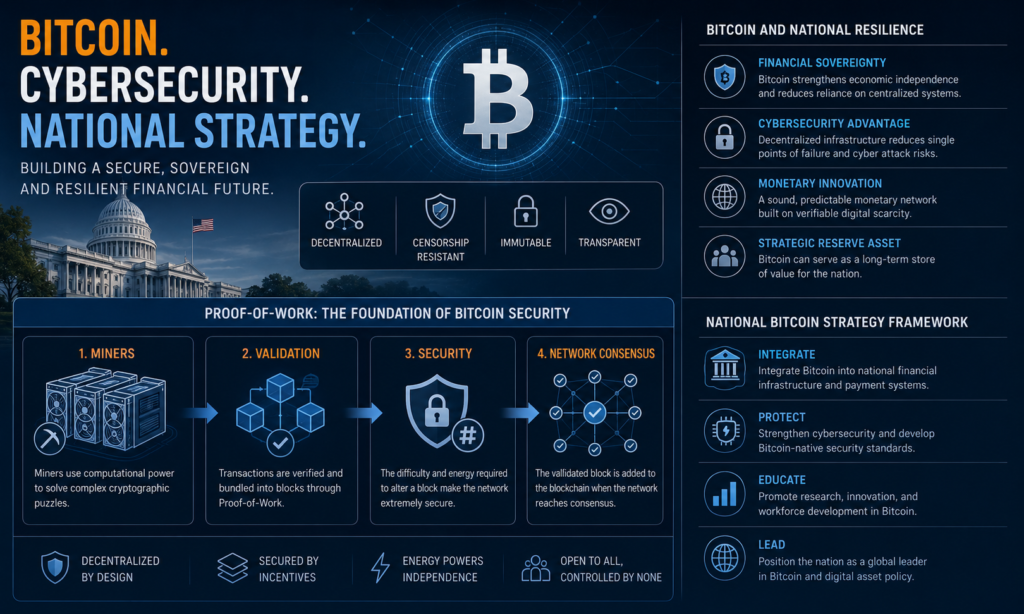
One of the most important aspects of Bitcoin’s security model is its proof-of-work consensus mechanism.
Proof-of-work requires miners to contribute substantial computational power and energy resources to validate transactions and secure the network.
This process creates several security advantages:
- high attack costs
- decentralized validation
- resistance to manipulation
- strong network integrity
- transparent consensus verification
Unlike centralized databases that can become vulnerable through a single compromised access point, Bitcoin’s distributed structure makes coordinated attacks significantly more difficult and expensive.
This is one reason why many cybersecurity experts continue viewing Bitcoin as one of the most resilient decentralized systems ever created.
For a deeper technical understanding of Bitcoin’s core design, readers can review the official Bitcoin Whitepaper.
Bitcoin and the Future of Cybersecurity Infrastructure
Cybersecurity threats have evolved rapidly over the last decade.
Nation-state attacks, ransomware campaigns, infrastructure breaches, and digital espionage operations have pushed governments to rethink how critical systems should operate in hostile digital environments.
Traditional centralized systems often face risks such as:
- server compromise
- database manipulation
- single-point infrastructure failures
- insider threats
Decentralized systems like Bitcoin introduce an alternative security model based on distributed consensus and cryptographic validation.
This is why some policymakers and defense analysts increasingly view blockchain technology as part of long-term digital infrastructure planning.
At the same time, advances in AI-powered blockchain security systems are also reshaping how vulnerabilities are detected and monitored across decentralized ecosystems.
The combination of blockchain resilience and AI-assisted cybersecurity tools could become a major component of future digital infrastructure.
Bitcoin’s Growing Role in Geopolitical Competition

The global race for technological dominance is no longer limited to artificial intelligence and semiconductor manufacturing.
Blockchain infrastructure, digital currencies, and decentralized financial systems are also becoming strategically important.
Countries are increasingly competing across:
- energy infrastructure
- AI systems
- quantum computing
- cybersecurity
- digital payments
- blockchain networks
Bitcoin mining itself has become part of this geopolitical conversation because mining infrastructure requires:
- energy access
- hardware manufacturing
- computing resources
- stable regulatory environments
The United States has significantly increased its position within global Bitcoin mining markets in recent years, especially following restrictions imposed on mining activities in China.
These developments have intensified policy discussions around:
- domestic mining infrastructure
- energy security
- technological independence
- supply chain resilience
Ongoing Bitcoin mining policy discussions in the United States continue reflecting how digital asset infrastructure is gradually entering national strategic planning.
Why Institutional Interest in Bitcoin Continues Expanding
Institutional adoption has played a major role in changing Bitcoin’s reputation globally.
Major financial firms and asset managers are increasingly exploring:
- Bitcoin ETFs
- institutional custody
- tokenized financial systems
- blockchain settlement infrastructure
- decentralized asset management
This broader movement toward institutional blockchain adoption is influencing how governments and corporations view digital assets.
As financial infrastructure becomes increasingly digitized, Bitcoin is beginning to be evaluated not only as an investment asset, but also as a strategic infrastructure layer within the digital economy.
This shift could significantly impact:
- global finance
- sovereign reserves
- cross-border payments
- cybersecurity frameworks
- digital infrastructure resilience
Can Bitcoin Become Part of Critical Infrastructure?
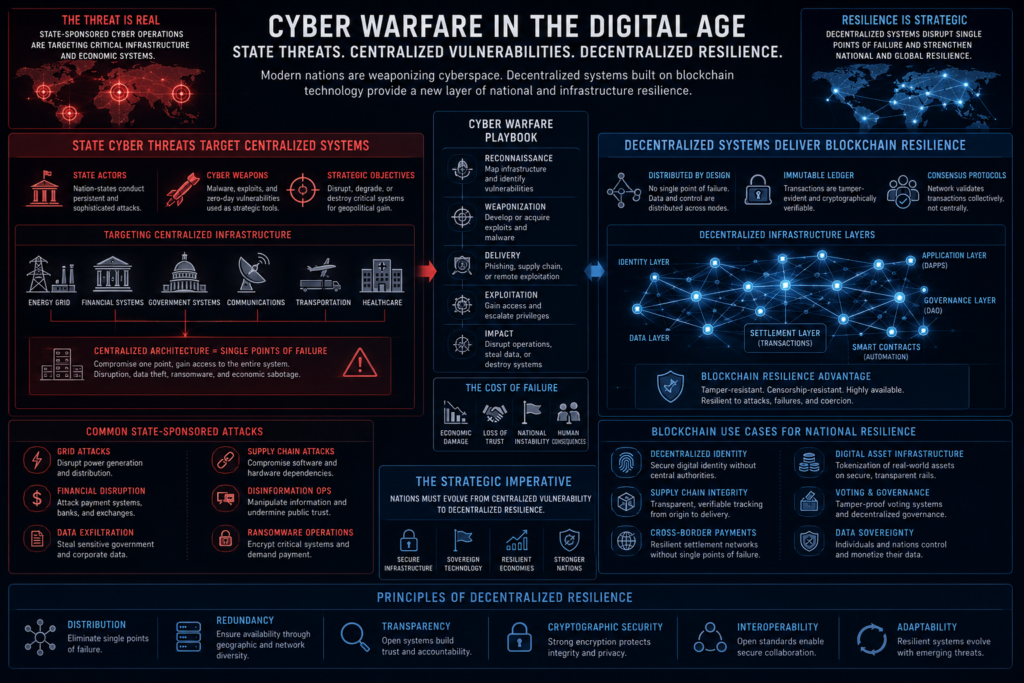
One of the most important long-term questions is whether Bitcoin could eventually become integrated into national infrastructure strategies.
Some analysts believe decentralized networks may support:
- secure communication systems
- resilient settlement infrastructure
- energy grid optimization
- censorship-resistant financial rails
- digital identity verification
Bitcoin’s mining ecosystem has also introduced discussions around energy monetization and grid balancing, where excess energy production can be redirected toward mining operations.
In regions with unstable infrastructure or geopolitical uncertainty, decentralized systems may provide alternative resilience mechanisms that centralized architectures cannot easily replicate.
At the same time, Bitcoin’s expanding role in financial infrastructure is also influencing broader conversations around collateralization and lending systems.
These developments suggest Bitcoin’s utility is gradually extending beyond speculative trading into more practical infrastructure-related applications.
Criticism and Challenges Facing Bitcoin’s Strategic Narrative
Despite growing institutional and geopolitical interest, Bitcoin continues facing several criticisms and challenges.
Energy Consumption Concerns
Bitcoin’s proof-of-work model consumes significant amounts of electricity, leading to ongoing environmental debates.
Critics argue large-scale mining operations may create sustainability concerns if powered by non-renewable energy sources.
Mining Centralization Risks
Although Bitcoin is decentralized by design, mining concentration in certain geographic regions or mining pools can still create concerns around network influence.
Regulatory Uncertainty
Governments worldwide continue developing policies surrounding:
- digital assets
- taxation
- mining operations
- anti-money laundering rules
- financial compliance
Regulatory shifts could impact Bitcoin adoption and infrastructure development.
Cybersecurity Risks Beyond the Protocol
While Bitcoin’s core network has remained highly resilient, surrounding infrastructure such as:
- exchanges
- custodians
- wallets
- bridges
can still become vulnerable to attacks.
The broader Web3 ecosystem continues facing serious DeFi security risks that impact trust across blockchain markets.
Why Bitcoin’s Narrative Is Changing
Bitcoin’s identity has evolved significantly over time.
Initially viewed as:
- experimental technology
- niche internet money
- speculative asset
it is now increasingly discussed in relation to:
- financial infrastructure
- geopolitical resilience
- digital sovereignty
- institutional finance
- cybersecurity systems
This narrative shift is largely driven by:
- institutional adoption
- macroeconomic uncertainty
- technological competition
- rising cyber threats
- blockchain infrastructure growth
As global systems become increasingly digital, decentralized technologies may continue gaining strategic importance.
Final Thoughts
Bitcoin’s growing connection to cybersecurity and national infrastructure discussions reflects a major shift in how decentralized technologies are being evaluated globally.
What was once considered primarily a speculative digital currency is now being analyzed through the lens of:
- infrastructure resilience
- geopolitical competition
- cyber defense
- strategic technological advantage
While Bitcoin still faces challenges related to regulation, energy usage, and infrastructure development, its decentralized architecture continues attracting attention from policymakers, institutions, and cybersecurity experts.
As governments and corporations continue adapting to an increasingly digital and interconnected world, Bitcoin’s role may expand far beyond finance into broader strategic infrastructure systems.
The next phase of Bitcoin adoption may not be driven solely by investors — but by the growing global demand for resilient digital infrastructure.
FAQ
Why is Bitcoin considered secure?
Bitcoin uses a decentralized proof-of-work consensus system that makes attacks extremely expensive and difficult to execute at scale.
What is proof-of-work in Bitcoin?
Proof-of-work is the mechanism Bitcoin uses to validate transactions and secure the network through computational mining activity.
Why are governments interested in Bitcoin infrastructure?
Governments are increasingly exploring decentralized technologies for cybersecurity resilience, digital infrastructure, and strategic technological competitiveness.
How does Bitcoin relate to cybersecurity?
Bitcoin’s decentralized structure and cryptographic validation system align with modern cybersecurity principles focused on resilience and distributed trust.
Can Bitcoin become part of national strategic infrastructure?
Some analysts believe decentralized blockchain systems may eventually support critical digital infrastructure, financial resilience, and secure communication frameworks.