







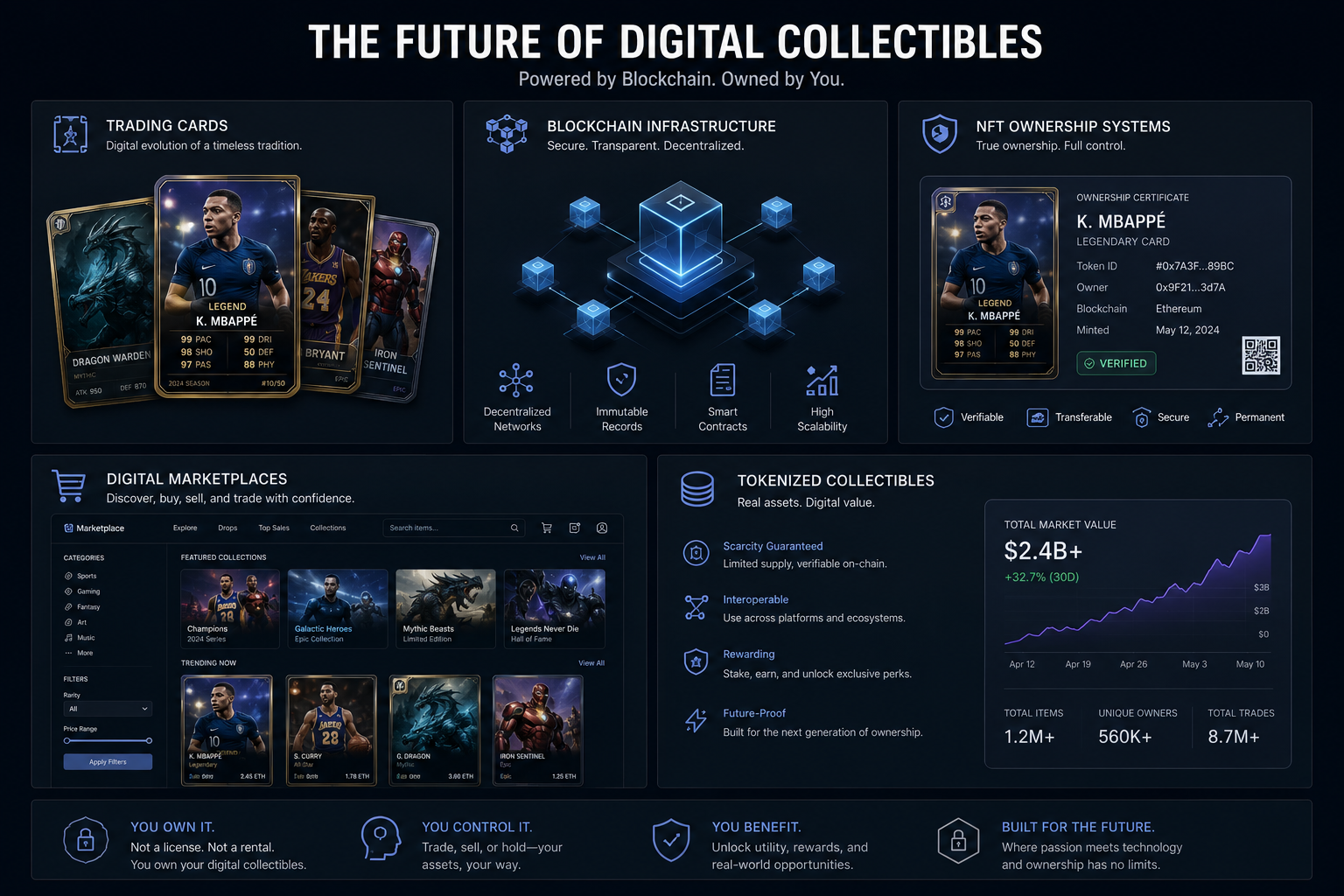
The decentralized finance industry is increasingly moving beyond traditional crypto-native products such as lending protocols and decentralized exchanges. One of the most surprising areas of recent growth has emerged from the booming global market for trading card collectibles.
- Why Trading Cards Are Becoming Blockchain Assets
- How Onchain Trading Card Marketplaces Work
- Why DeFi Is Expanding Beyond Traditional Finance
- Why NFT Infrastructure Is Becoming More Important
- Why Liquidity and Redemption Risks Still Matter
- Why Pokémon Cards Became a Perfect Fit for DeFi
- Why Tokenized Collectibles Reflect a Larger Industry Shift
- Can Tokenized Collectibles Become Sustainable?
- Final Thoughts
- FAQ
Blockchain-based marketplaces that tokenize physical trading cards — including Pokémon, sports cards, and anime collectibles — are rapidly becoming one of the fastest-growing segments within digital asset markets. According to recent industry data, onchain collectible platforms generated millions of dollars in marketplace revenue during the past month alone.
This growth highlights a broader trend reshaping the Web3 industry:
the convergence between:
- decentralized finance
- collectible speculation
- tokenized ownership
- digital liquidity infrastructure
As tokenized assets continue expanding across multiple industries, trading cards are becoming one of the clearest examples of how blockchain infrastructure is moving into mainstream consumer markets.
Why Trading Cards Are Becoming Blockchain Assets
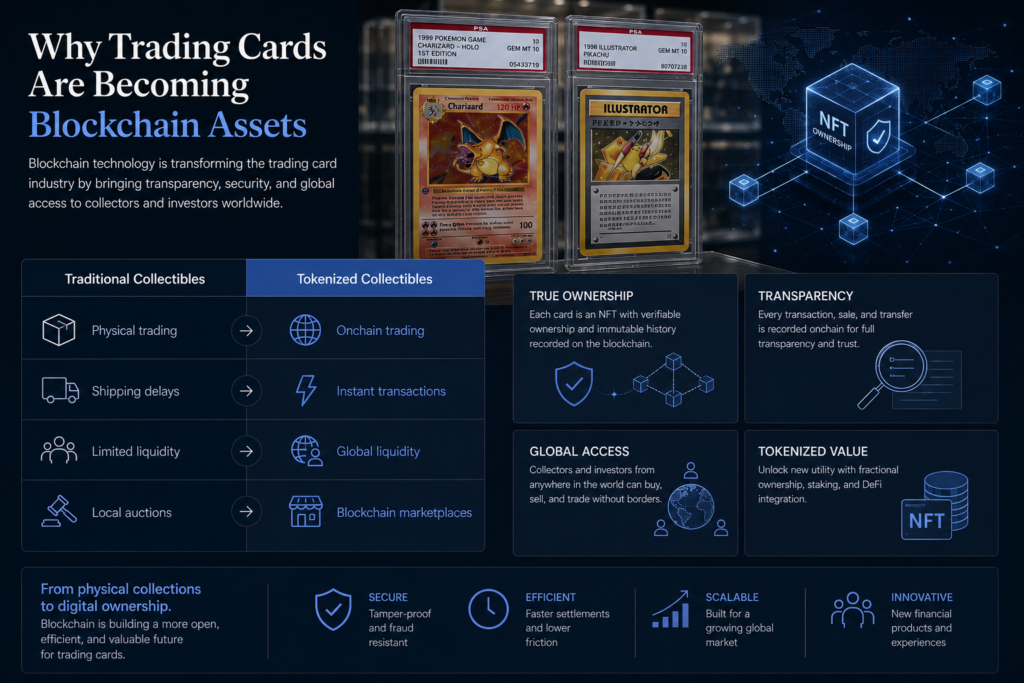
Trading cards have evolved from niche collector hobbies into a large global alternative asset market.
Over the past decade, collectible markets have experienced significant growth driven by:
- nostalgia
- scarcity
- social media exposure
- investor speculation
- grading systems
- influencer culture
Rare Pokémon cards, sports memorabilia, and limited-edition collectibles have increasingly attracted:
- collectors
- investors
- alternative asset traders
Some high-end cards now sell for hundreds of thousands of dollars, while sealed card packs frequently trade far above retail prices.
This speculative environment naturally aligns with blockchain infrastructure because both markets rely heavily on:
- scarcity
- ownership verification
- liquidity access
- digital marketplaces
As blockchain ecosystems mature, tokenized collectibles are becoming part of the broader movement toward tokenized financial infrastructure and digital asset ownership systems.
How Onchain Trading Card Marketplaces Work
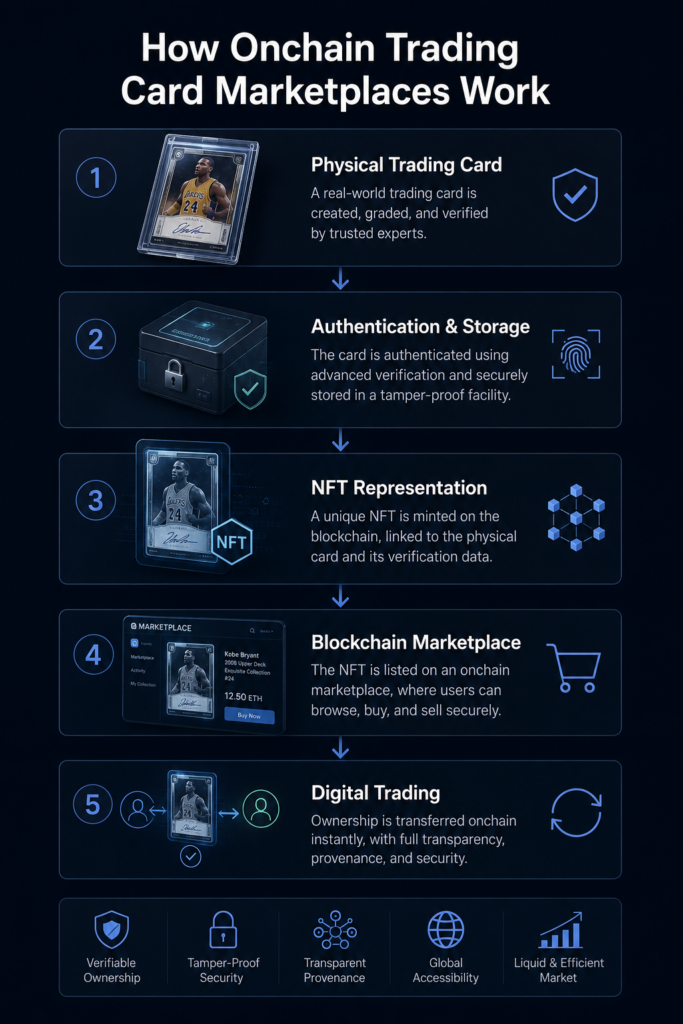
Most blockchain-based collectible platforms operate using a relatively straightforward structure.
The process typically involves:
- Physical cards or sealed packs are submitted to a platform
- The assets are authenticated and stored securely
- Blockchain-based NFT representations are issued
- Users trade these tokenized assets onchain
Instead of shipping physical cards repeatedly between buyers and sellers, ownership transfers digitally through blockchain infrastructure.
This creates several advantages:
- faster transactions
- global accessibility
- improved liquidity
- reduced handling risks
- fractional trading possibilities
Some marketplaces also integrate:
- gamified pack openings
- randomized NFT distributions
- rarity mechanics
- secondary trading markets
This model resembles how ETFs simplified access to commodities such as gold, but adapted for collectible assets and blockchain-based ownership systems.
Why DeFi Is Expanding Beyond Traditional Finance
One of the most important trends within Web3 is the expansion of decentralized finance into non-traditional asset categories.
Initially, DeFi primarily focused on:
- lending
- borrowing
- stablecoins
- yield farming
- decentralized exchanges
Today, blockchain infrastructure is increasingly being applied to:
- collectibles
- gaming assets
- tokenized real-world assets
- intellectual property
- digital identity
- event-driven products
This broader evolution reflects how blockchain systems are gradually becoming infrastructure layers for digital ownership and alternative financial markets.
The growth of tokenized trading cards demonstrates how decentralized systems are searching for:
- sustainable revenue models
- consumer adoption
- real-world utility
- alternative liquidity markets
As Web3 ecosystems mature, speculative trading alone is no longer sufficient to sustain long-term infrastructure growth.
Why NFT Infrastructure Is Becoming More Important
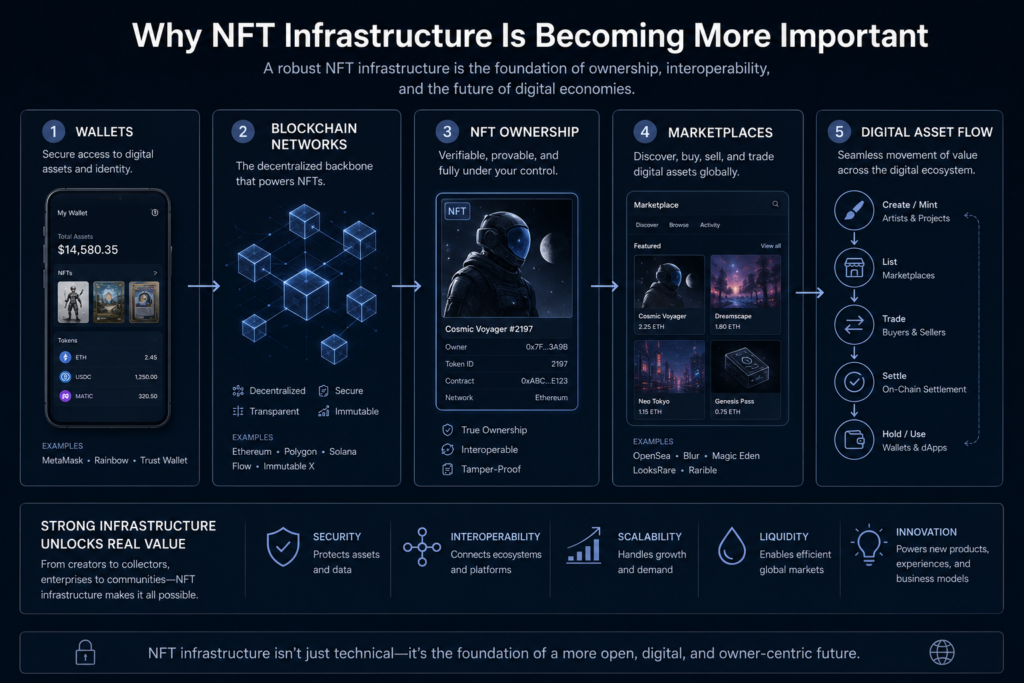
Tokenized trading card platforms rely heavily on NFT infrastructure.
Unlike speculative profile-picture NFT collections, these systems focus on:
- ownership representation
- asset verification
- marketplace liquidity
- digital transferability
- collectible authentication
This shift is pushing NFT ecosystems away from pure speculation and toward infrastructure-oriented use cases.
Modern NFT marketplaces increasingly require:
- scalable blockchain systems
- multi-chain compatibility
- secure custody solutions
- reliable redemption systems
- marketplace interoperability
Growing enterprise interest in NFT marketplace infrastructure reflects this broader transformation happening across Web3.
NFT technology is gradually evolving into a larger component of digital ownership infrastructure.
Why Liquidity and Redemption Risks Still Matter
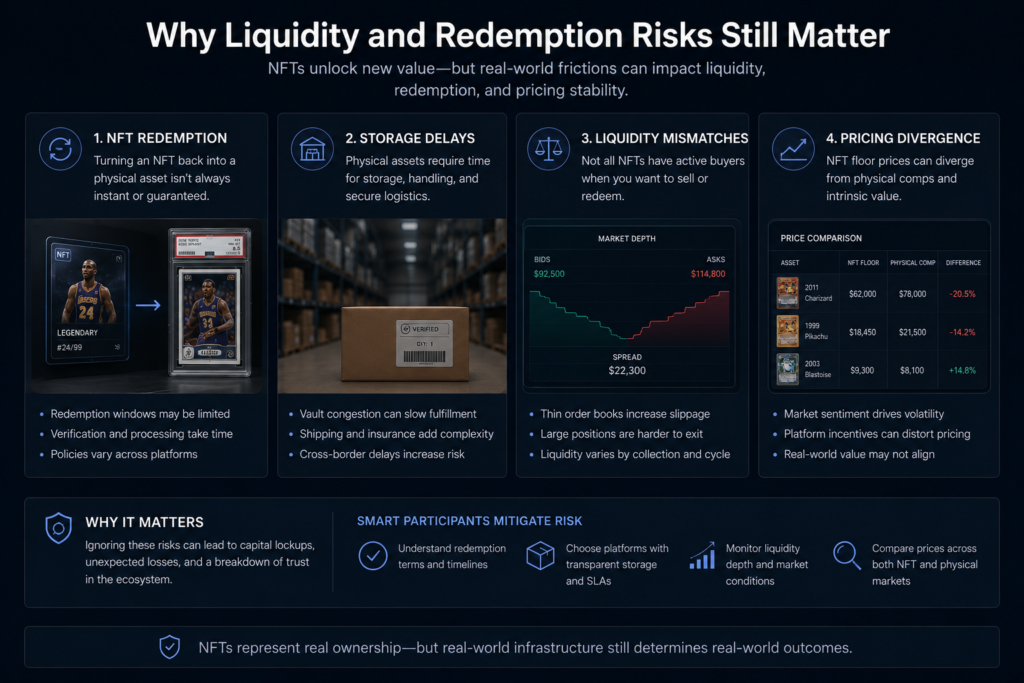
Despite strong marketplace growth, tokenized collectible systems still face several important challenges.
One of the biggest concerns involves the relationship between:
- physical assets
- blockchain representations
Because NFTs represent offchain physical items stored elsewhere, users still depend on:
- custodians
- authentication systems
- shipping infrastructure
- redemption processes
This creates several risks.
Redemption Delays
If large numbers of users attempt to redeem physical assets simultaneously, delays may occur involving:
- shipping
- verification
- storage access
- insurance handling
Liquidity Mismatches
NFT prices may diverge from the actual value of underlying collectibles during periods of market volatility.
This can create:
- pricing inefficiencies
- liquidity pressure
- speculative distortions
Custody Risk
Users must trust platforms to properly:
- secure assets
- maintain inventory
- prevent fraud
- manage authentication
These challenges resemble broader DeFi security risks already impacting blockchain financial infrastructure.
As tokenized asset systems expand, trust and operational reliability will become increasingly important.
Why Pokémon Cards Became a Perfect Fit for DeFi
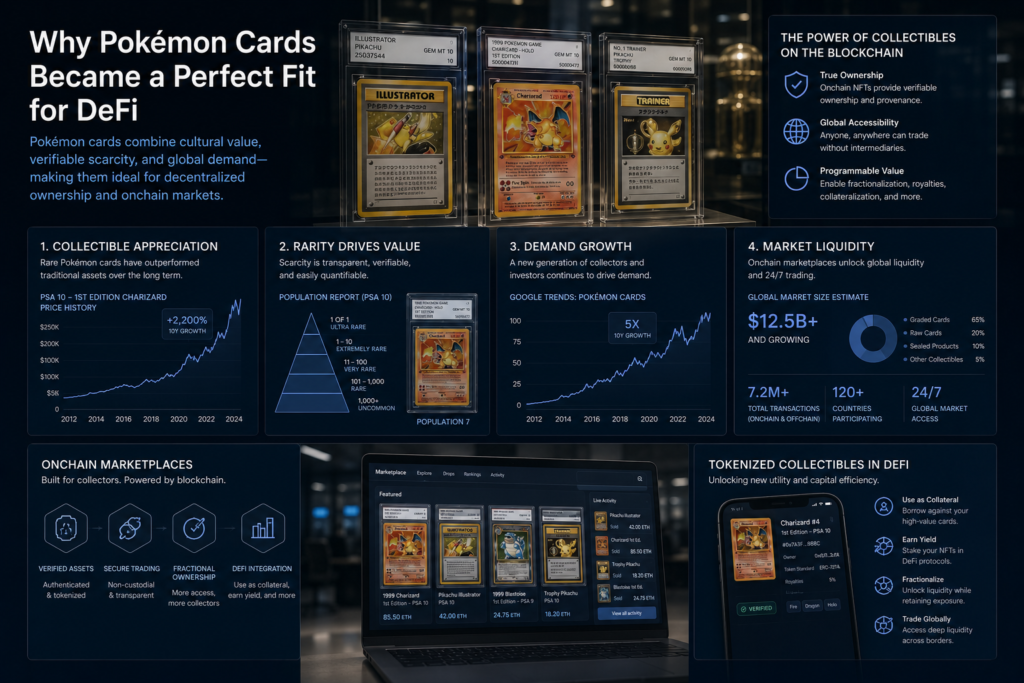
Among all collectible categories, Pokémon cards have become one of the strongest examples of blockchain-compatible speculation.
Several factors contributed to this:
- strong nostalgia
- global brand recognition
- limited supply dynamics
- active collector communities
- social media visibility
Rare Pokémon cards have delivered extraordinary long-term appreciation, attracting:
- collectors
- traders
- investors
- speculative capital
At the same time, physical trading card markets still suffer from inefficiencies such as:
- slow transactions
- authentication challenges
- illiquid marketplaces
- international shipping costs
Blockchain marketplaces help solve many of these issues by digitizing ownership and increasing market accessibility.
This combination of:
- emotional attachment
- scarcity
- speculative demand
- digital liquidity
has created ideal conditions for onchain collectible markets.
Why Tokenized Collectibles Reflect a Larger Industry Shift
The rise of tokenized trading cards is not an isolated trend.
It reflects a broader movement toward:
- digital ownership
- tokenized assets
- blockchain infrastructure
- programmable marketplaces
Many industries are now exploring tokenization for:
- real estate
- financial products
- gaming assets
- collectibles
- intellectual property
- luxury goods
This convergence between blockchain systems and physical assets is gradually reshaping how ownership and liquidity function within digital markets.
At the same time, institutional interest in blockchain infrastructure continues expanding globally.
Growing discussions around institutional blockchain adoption show how digital asset systems are increasingly intersecting with traditional finance.
Can Tokenized Collectibles Become Sustainable?
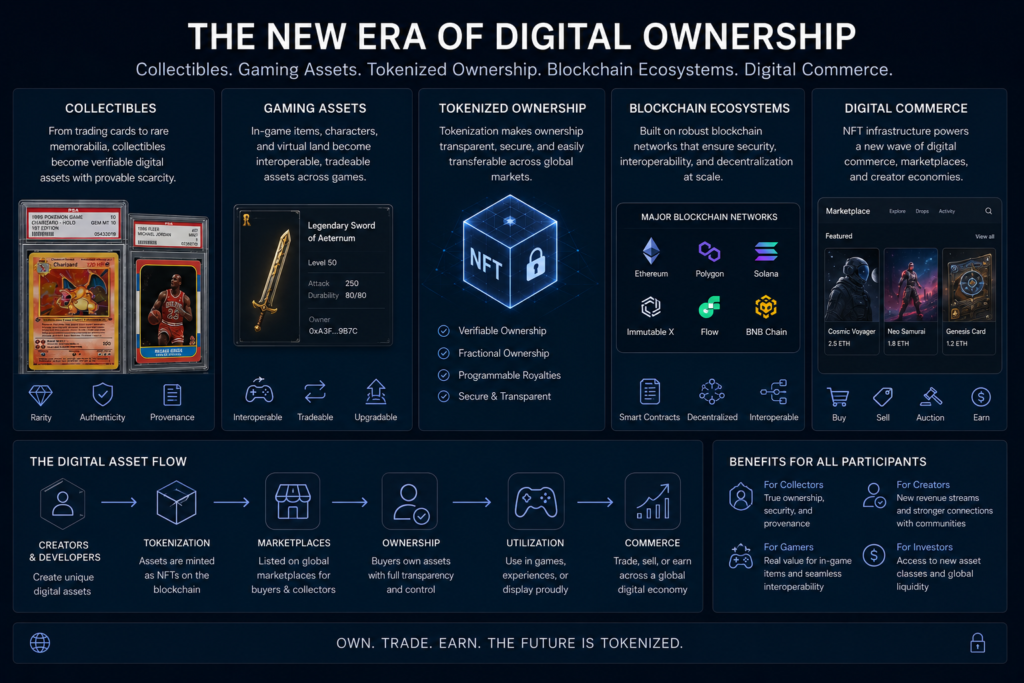
The long-term sustainability of onchain collectible markets will depend on several key factors.
Market Demand
Continued interest in collectibles is essential for maintaining marketplace liquidity and user participation.
Platform Trust
Users must trust that platforms:
- securely store assets
- maintain transparency
- handle redemptions properly
Infrastructure Scalability
As marketplaces grow, platforms will need:
- scalable blockchain systems
- efficient transaction infrastructure
- strong custody solutions
Regulatory Clarity
Governments may increasingly examine:
- tokenized ownership models
- digital asset classifications
- taxation frameworks
- consumer protections
The future success of tokenized collectibles will likely depend on whether platforms can balance:
- speculation
- infrastructure reliability
- transparency
- long-term utility
Final Thoughts
The rapid growth of blockchain-based trading card marketplaces demonstrates how decentralized finance is evolving beyond traditional crypto-native applications.
What began as speculative NFT experimentation is increasingly becoming:
- digital ownership infrastructure
- collectible liquidity systems
- tokenized consumer markets
Trading cards may seem like an unexpected frontier for DeFi, but they represent something much larger:
the expansion of blockchain infrastructure into real-world asset markets.
As tokenization continues spreading across industries, collectible ecosystems could become one of the clearest examples of how Web3 technology creates new forms of ownership, liquidity, and digital commerce.
The long-term future of these systems will depend not only on speculation — but on whether platforms can build trustworthy, scalable, and sustainable infrastructure around tokenized physical assets.
FAQ
What are tokenized trading cards?
Tokenized trading cards are blockchain-based NFT representations of physical collectible cards stored by custodial platforms.
How do onchain trading card marketplaces work?
Users deposit physical collectibles with a platform, which then issues NFT representations that can be traded digitally on blockchain networks.
Why are Pokémon cards popular in blockchain marketplaces?
Pokémon cards combine scarcity, nostalgia, and speculative demand, making them attractive for tokenized trading systems.
What are the risks of tokenized collectibles?
Major risks include custody issues, redemption delays, liquidity mismatches, and platform security concerns.
Why is DeFi expanding into collectibles?
DeFi platforms are increasingly exploring alternative asset markets to create sustainable revenue models and broader consumer adoption.