







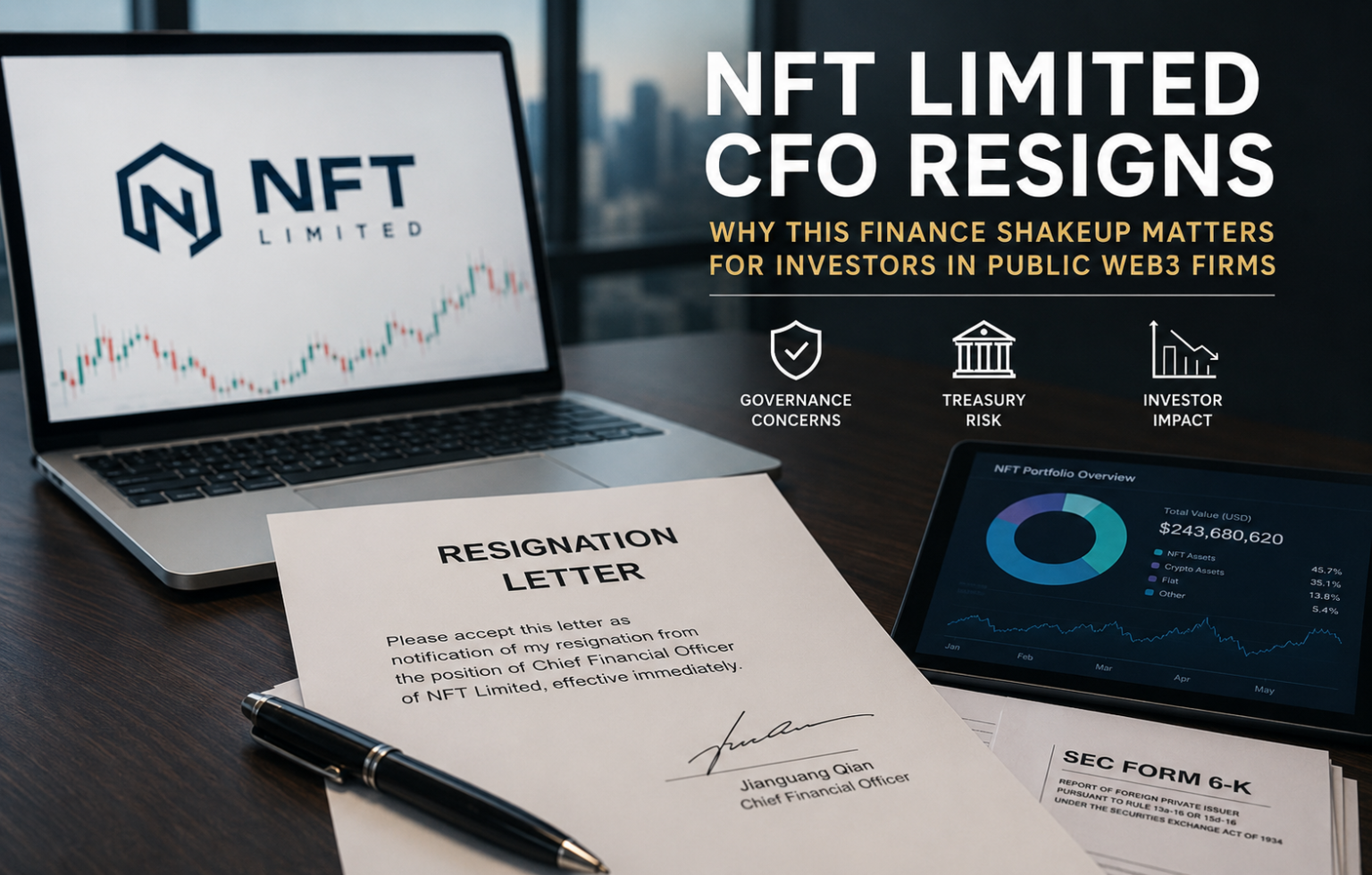
A sudden executive departure inside a public Web3 company may look routine at first glance, but in crypto-native businesses, finance leadership carries far more weight than traditional accounting oversight. The recent resignation of NFT Limited CFO Jianguang Qian has raised broader questions about governance, treasury controls, custody management, and operational continuity inside publicly traded blockchain firms.
- What Happened?
- Why This Matters More in Web3 Companies
- Missing Information Creates Market Risk
- Why Treasury Controls Matter in Crypto
- The Growing Importance of Institutional Governance
- Operational Risks Investors Should Watch
- What NFT Limited Should Do Next
- Broader Implications for Public Web3 Firms
- Expert Commentary
- FAQ
- Conclusion
Unlike conventional tech companies, Web3 firms manage tokenized assets, on-chain treasury operations, NFT inventories, and crypto custody systems that require highly specialized financial oversight. When a CFO exits unexpectedly, investors are not just evaluating leadership risk — they are evaluating whether the company can maintain institutional trust, audit readiness, and operational security.
What Happened?
NFT Limited disclosed the resignation of its Chief Financial Officer Jianguang Qian through a brief SEC Form 6-K filing on May 7, 2026. The filing stated there were “no disagreements” involving accounting policies or operational matters, language commonly used in corporate filings to reduce speculation around executive departures.
However, the filing provided very limited operational detail regarding:
- Interim finance leadership
- Treasury signing authority
- Custody control transitions
- Auditor coordination
- Internal governance safeguards
That lack of transparency is exactly why investors are paying attention.
In traditional public companies, CFO transitions are usually manageable. But for Web3-native firms handling crypto assets and blockchain infrastructure, finance leadership often acts as the bridge between decentralized systems and public-market compliance.
Why This Matters More in Web3 Companies
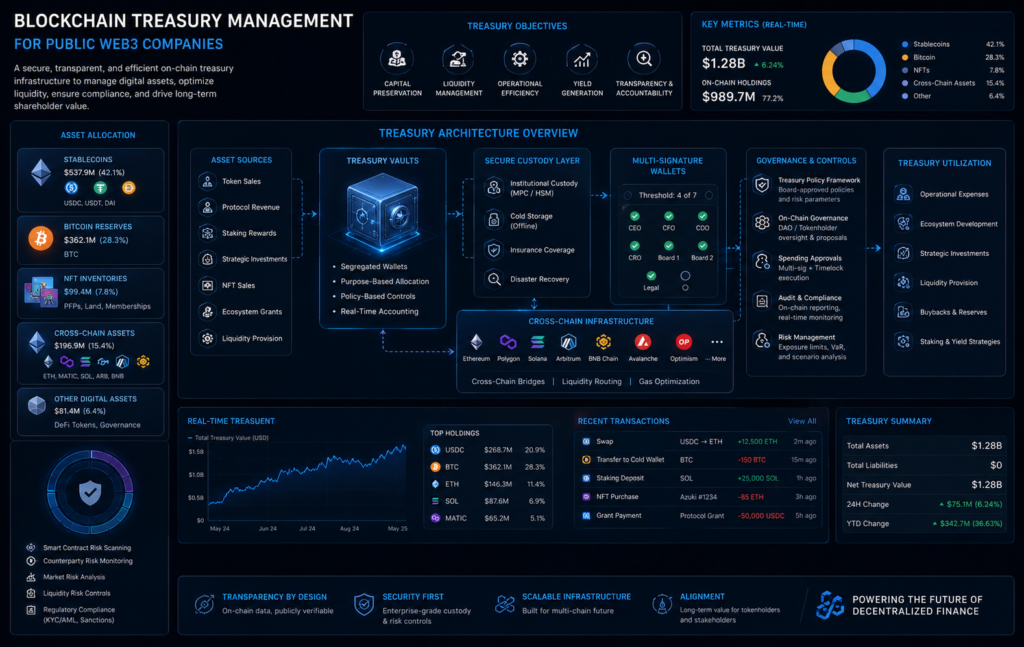
Public blockchain firms operate under a very different financial structure compared to normal corporations.
A Web3 CFO is not only responsible for:
- SEC reporting
- Financial forecasting
- Investor relations
- Internal controls
They are also responsible for:
- Crypto treasury management
- Multi-signature wallet governance
- Token valuation models
- NFT inventory accounting
- Custody attestations
- On-chain reconciliation
- Revenue recognition from blockchain activity
This combination of responsibilities makes experienced Web3 finance executives extremely difficult to replace.
The situation becomes even more sensitive as institutional investors increasingly evaluate crypto companies based on governance quality and operational resilience instead of pure growth narratives.
Missing Information Creates Market Risk
One of the biggest concerns surrounding the resignation is not necessarily the departure itself — but the information that was omitted from the filing.
The company did not clarify:
- Who currently controls treasury operations
- Whether signing privileges changed
- How custody systems are being managed
- Which executive now interfaces with auditors
- Whether internal valuation procedures remain intact
In crypto markets, uncertainty itself creates risk.
Counterparties, lenders, custodians, and institutional investors often respond conservatively when governance clarity weakens. According to operational concerns highlighted in the filing analysis, this can result in:
- tighter lending conditions,
- increased audit scrutiny,
- delayed reporting,
- restricted custody permissions,
- and higher compliance costs.
Why Treasury Controls Matter in Crypto
Treasury management inside Web3 firms is fundamentally different from traditional corporate banking.
Many crypto companies hold:
- Bitcoin reserves
- Ethereum holdings
- NFT inventories
- Stablecoins
- Governance tokens
- Cross-chain assets
These assets often move through:
- multi-signature wallets,
- smart contracts,
- decentralized custody systems,
- and cross-chain bridges.
If authority structures become unclear during executive transitions, operational risk increases significantly.
This is particularly important in an industry already dealing with:
- exchange collapses,
- bridge exploits,
- custody failures,
- and treasury mismanagement scandals.
The broader industry has already seen how governance weaknesses can rapidly impact investor trust, similar to concerns raised in DeFi security and trust issues and recent institutional caution surrounding crypto infrastructure firms.
The Growing Importance of Institutional Governance
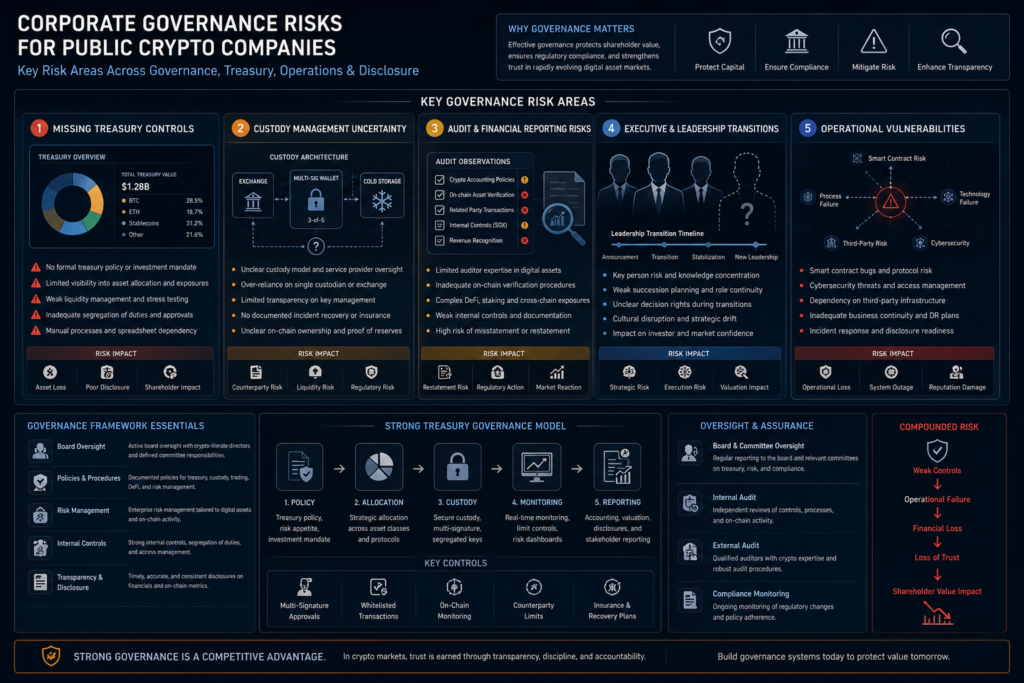
The timing of this resignation also matters.
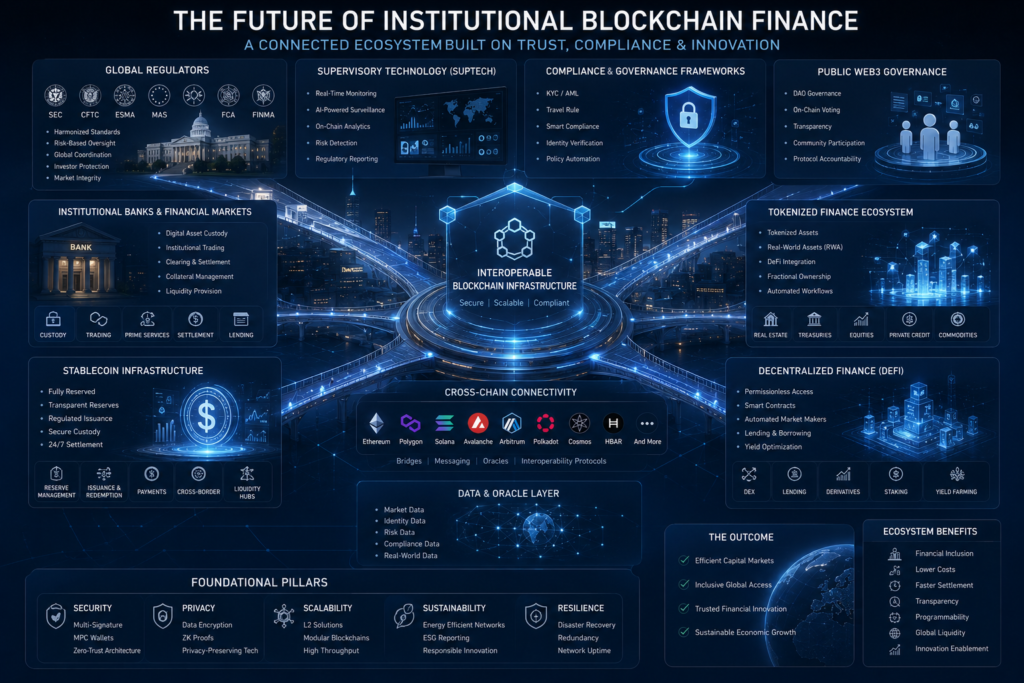
The crypto industry is entering a phase where institutional adoption is accelerating rapidly. Major firms are expanding into:
- tokenization,
- ETF products,
- stablecoin infrastructure,
- and blockchain settlement systems.
As discussed in JPMorgan’s outlook on tokenization and financial infrastructure, institutions increasingly expect crypto firms to operate with governance standards comparable to traditional financial institutions.
That means investors now pay closer attention to:
- succession planning,
- internal controls,
- treasury governance,
- audit continuity,
- and operational transparency.
A weak governance response can impact valuation, financing access, and long-term credibility.
Institutional investors are increasingly evaluating blockchain companies based on infrastructure resilience, DeFi security risks, and operational governance standards rather than speculative growth narratives.
Operational Risks Investors Should Watch
Several practical risks may emerge if the transition is not handled properly.
1. Custody Restrictions
Crypto custodians may temporarily tighten access controls until authority structures are verified.
2. Expanded Auditor Scrutiny
Auditors may increase testing requirements or delay approvals to reduce professional risk exposure.
3. Treasury Vulnerabilities
Poorly documented treasury authority can increase operational and security risks during transitions.
4. Investor Confidence Pressure
Governance uncertainty often impacts stock liquidity and widens bid-ask spreads in smaller public companies.
5. Financing Challenges
Lenders and institutional partners may demand stricter terms or additional collateral protections.
These concerns become especially important as more public blockchain companies attempt to position themselves as institutional-grade financial infrastructure providers.
Public blockchain firms increasingly rely on AI-powered smart contract auditing and institutional-grade security infrastructure to reduce governance and treasury vulnerabilities.
What NFT Limited Should Do Next
Industry analysts and governance experts generally expect several immediate actions following executive transitions in crypto firms.
Appoint an Interim Finance Leader
The company should publicly clarify who currently oversees:
- treasury operations,
- reporting,
- auditor communication,
- and custody systems.
Reassure Auditors and Custodians
Documented delegation-of-authority processes help maintain continuity and reduce operational friction.
Strengthen Treasury Controls
Temporary dual-signature systems, withdrawal limits, and transparent custody verification can reduce market concerns.
Improve Public Communication
Investors typically respond more positively when companies provide:
- transition timelines,
- governance safeguards,
- and hiring criteria for permanent replacements.
Broader Implications for Public Web3 Firms
This situation reflects a much larger industry trend.
As crypto companies increasingly enter public markets, governance quality is becoming one of the most important competitive advantages.
Public Web3 firms are no longer evaluated solely on:
- token performance,
- community size,
- or speculative momentum.
They are now being evaluated on:
- operational resilience,
- treasury management,
- audit readiness,
- institutional compatibility,
- and executive stability.
This shift mirrors broader institutional trends discussed in Bitcoin’s growing role in institutional and geopolitical finance and the rise of tokenized financial systems.
Expert Commentary
The resignation itself may not necessarily indicate deeper operational problems.
However, in public blockchain companies, leadership transitions expose the maturity of internal systems very quickly.
Strong organizations can handle executive turnover without disrupting:
- treasury security,
- reporting timelines,
- or institutional relationships.
Weak governance structures, on the other hand, often become visible during periods of transition.
The market is no longer only watching product growth in Web3 — it is watching operational credibility.
FAQ
Why is a CFO so important in Web3 companies?
Web3 CFOs oversee not only traditional finance operations but also crypto treasury management, custody systems, token valuation, and blockchain accounting.
Did NFT Limited report disagreements with the CFO?
No. The SEC filing stated there were no disagreements regarding accounting or company operations.
Why are investors concerned?
The filing lacked details about interim leadership, treasury authority, and operational continuity.
Could this impact the company’s stock?
Governance uncertainty can negatively affect investor sentiment, financing conditions, and liquidity.
Why does governance matter more now in crypto?
Institutional investors increasingly expect blockchain firms to operate with traditional financial governance standards.
Conclusion
NFT Limited’s CFO resignation may appear minor on the surface, but it highlights a much bigger issue inside the evolving Web3 economy: governance is becoming just as important as innovation.
As blockchain firms mature and institutional adoption accelerates, public crypto companies must demonstrate:
- operational resilience,
- transparent treasury controls,
- strong succession planning,
- and institutional-grade financial governance.
For investors, this event serves as another reminder that in Web3 markets, infrastructure credibility and financial stewardship are becoming critical long-term valuation drivers.