







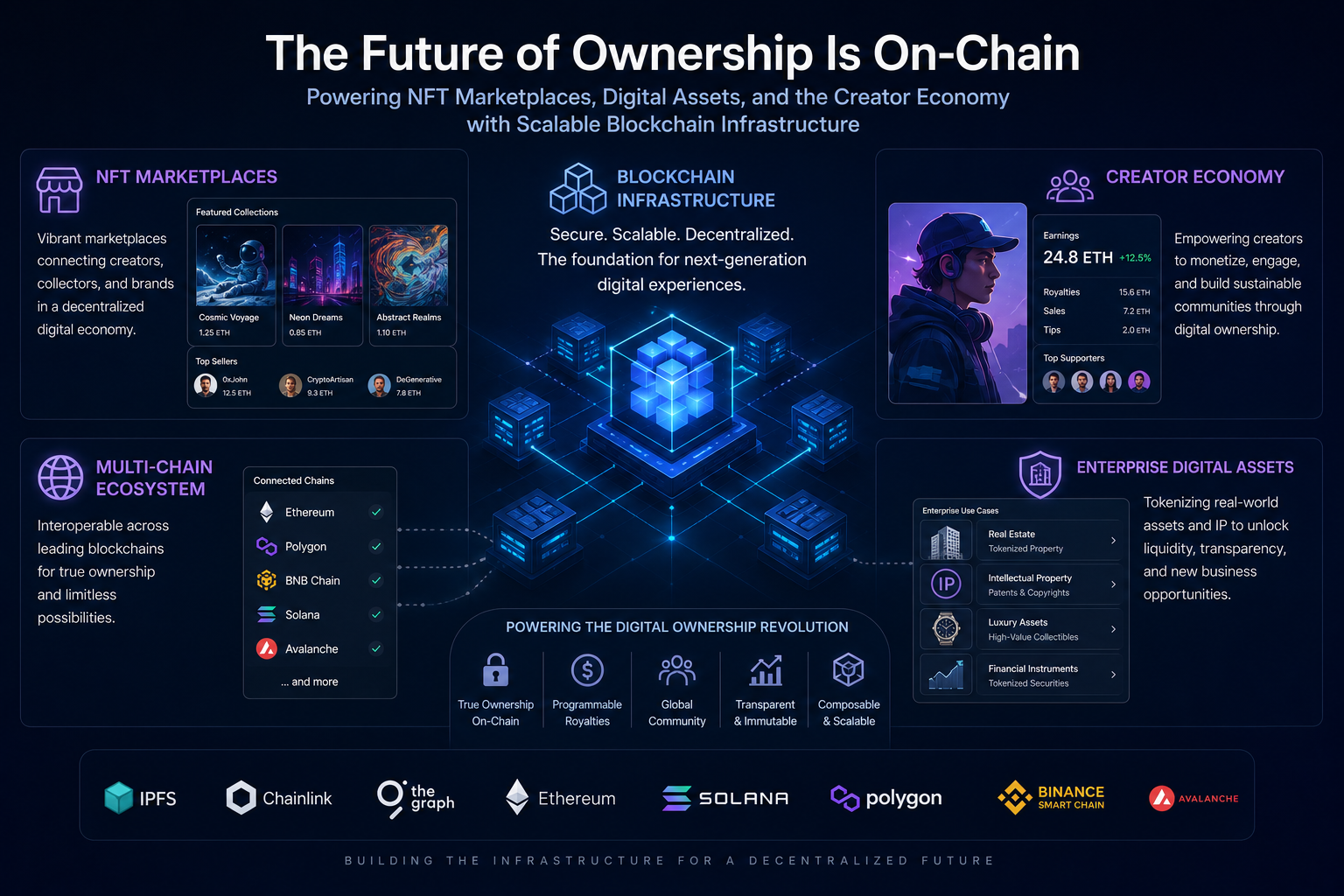
The NFT industry has evolved far beyond speculative profile-picture collections and short-term trading hype. In 2026, NFT marketplaces are increasingly being developed as infrastructure platforms supporting:
- Why NFT Marketplace Development Has Changed
- Why Multi-Chain NFT Infrastructure Is Becoming Essential
- Why Smart Contract Security Is Now a Core Requirement
- Why NFT Marketplaces Are Becoming Financial Infrastructure
- What Businesses Should Look for in NFT Marketplace Development Companies
- The Rise of Enterprise NFT Infrastructure
- Why Gaming and Metaverse NFTs Require Specialized Development
- Why AI Is Becoming Important in NFT Marketplace Development
- Why Compliance and Regulation Are Becoming Critical
- The NFT Industry Is Moving Beyond Speculation
- Final Thoughts
- FAQ
- gaming ecosystems
- digital ownership
- creator economies
- loyalty systems
- music rights
- tokenized real-world assets
- enterprise digital commerce
This transformation has significantly changed what businesses expect from NFT marketplace development companies.
Modern NFT platforms are no longer simple trading websites competing with early marketplaces like OpenSea. Instead, they are becoming highly specialized blockchain ecosystems requiring:
- scalable infrastructure
- multi-chain compatibility
- smart contract security
- compliance frameworks
- user-friendly onboarding
- institutional-grade reliability
As Web3 adoption continues expanding, businesses are increasingly searching for development partners capable of building secure, scalable, and future-ready NFT infrastructure.
Why NFT Marketplace Development Has Changed
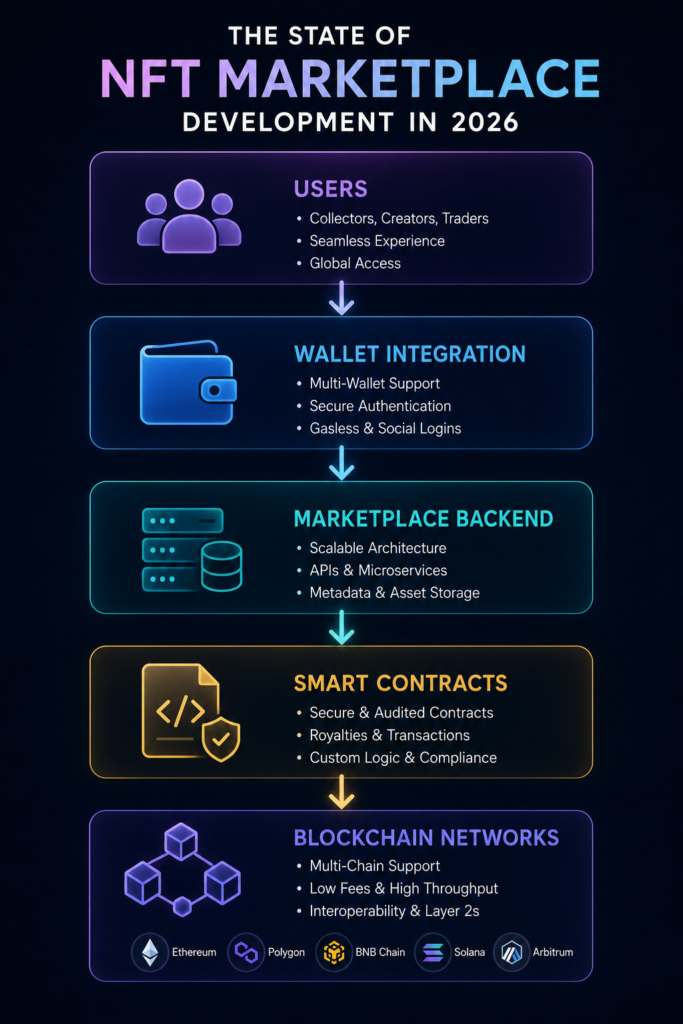
The NFT market today looks very different from the early speculative cycles that dominated the industry several years ago.
Previously, many NFT platforms focused heavily on:
- collectible trading
- speculative flipping
- viral community growth
- short-term marketplace activity
Today, the focus has shifted toward utility-driven ecosystems.
Modern NFT infrastructure is increasingly being used across:
- gaming economies
- ticketing systems
- digital identity
- intellectual property
- loyalty rewards
- tokenized assets
- membership systems
This evolution has increased technical complexity significantly.
Businesses now require NFT marketplaces capable of supporting:
- large user volumes
- cross-chain interoperability
- scalable transaction systems
- regulatory compliance
- enterprise-grade security
As blockchain adoption accelerates globally, NFT infrastructure is becoming part of a broader movement toward institutional blockchain adoption and digital asset integration:
Why Multi-Chain NFT Infrastructure Is Becoming Essential
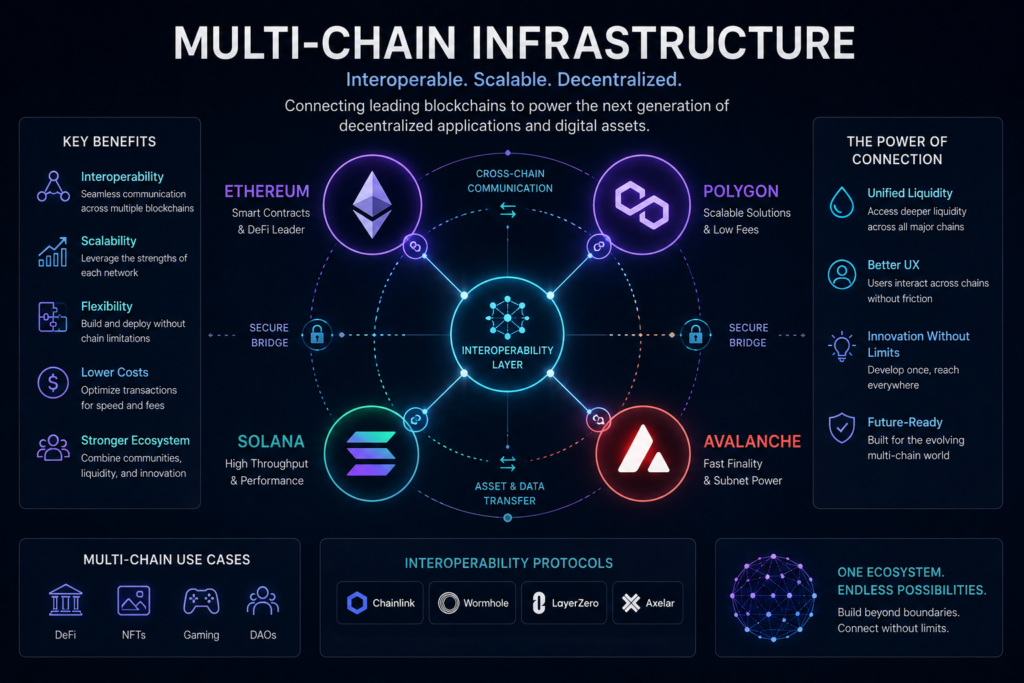
One of the biggest changes in NFT development is the rise of multi-chain infrastructure.
While Ethereum remains one of the dominant ecosystems for NFTs, businesses are increasingly expanding support to:
- Polygon
- Solana
- Avalanche
- BNB Chain
- Layer 2 networks
The reason is simple:
different blockchain ecosystems offer different advantages.
For example:
- Ethereum provides strong ecosystem security and liquidity
- Polygon offers lower transaction costs
- Solana focuses on scalability and speed
- Avalanche supports customizable blockchain environments
Modern NFT marketplaces increasingly need to support seamless interactions across multiple blockchain ecosystems.
This broader shift toward interoperable blockchain systems reflects the growing importance of major blockchain ecosystems within the Web3 economy:
Multi-chain support is no longer an optional feature — it is becoming a foundational infrastructure requirement.
Why Smart Contract Security Is Now a Core Requirement
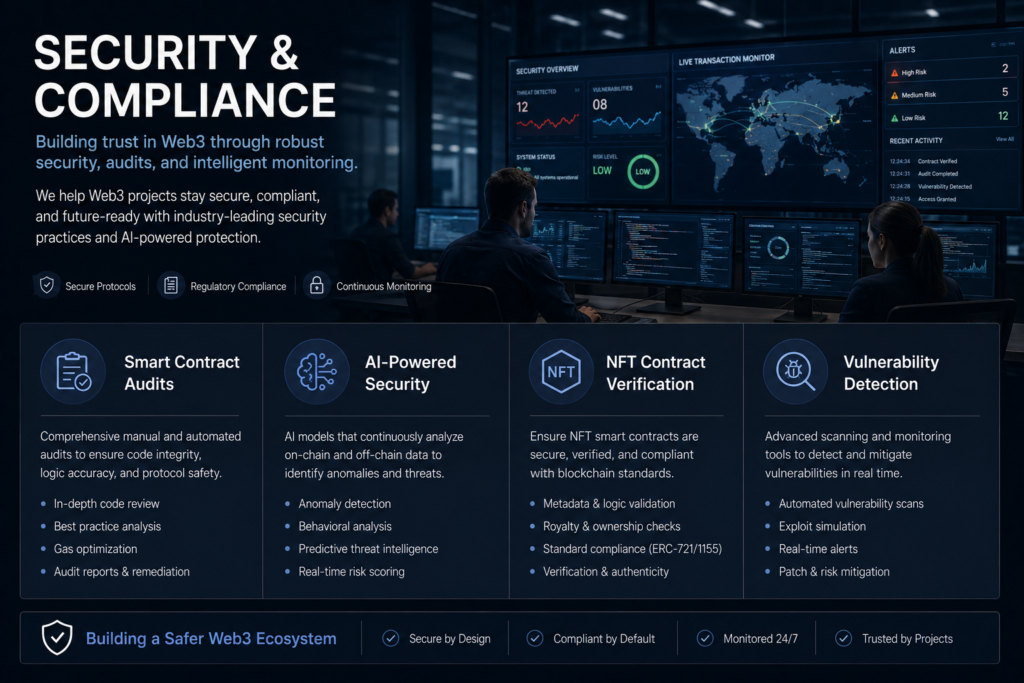
As NFT marketplaces evolve into larger financial ecosystems, security has become one of the most critical development priorities.
NFT platforms now frequently involve:
- asset custody
- royalties
- auctions
- tokenized ownership
- DeFi integrations
- creator payouts
- gaming assets
Any vulnerabilities within smart contracts can create major operational and financial risks.
The broader blockchain industry continues facing significant DeFi security risks related to:
- smart contract exploits
- governance attacks
- bridge vulnerabilities
- liquidity manipulation
As a result, modern NFT marketplace development increasingly depends on advanced smart contract security systems and auditing infrastructure:
Development companies that lack strong blockchain security expertise are becoming less competitive in enterprise-level NFT projects.
Why NFT Marketplaces Are Becoming Financial Infrastructure
One of the most important changes in the NFT industry is the shift toward infrastructure-focused use cases.
NFT marketplaces are no longer limited to art and collectibles.
Businesses are increasingly exploring NFT systems for:
- tokenized real estate
- gaming economies
- digital licensing
- intellectual property
- event ticketing
- loyalty programs
- financial assets
This convergence between NFTs and tokenized finance is creating entirely new infrastructure requirements.
Growing discussions around tokenized financial infrastructure show how blockchain-based ownership systems are becoming increasingly integrated into broader financial ecosystems.
As tokenized assets expand, NFT marketplaces may increasingly operate as financial infrastructure rather than entertainment platforms.
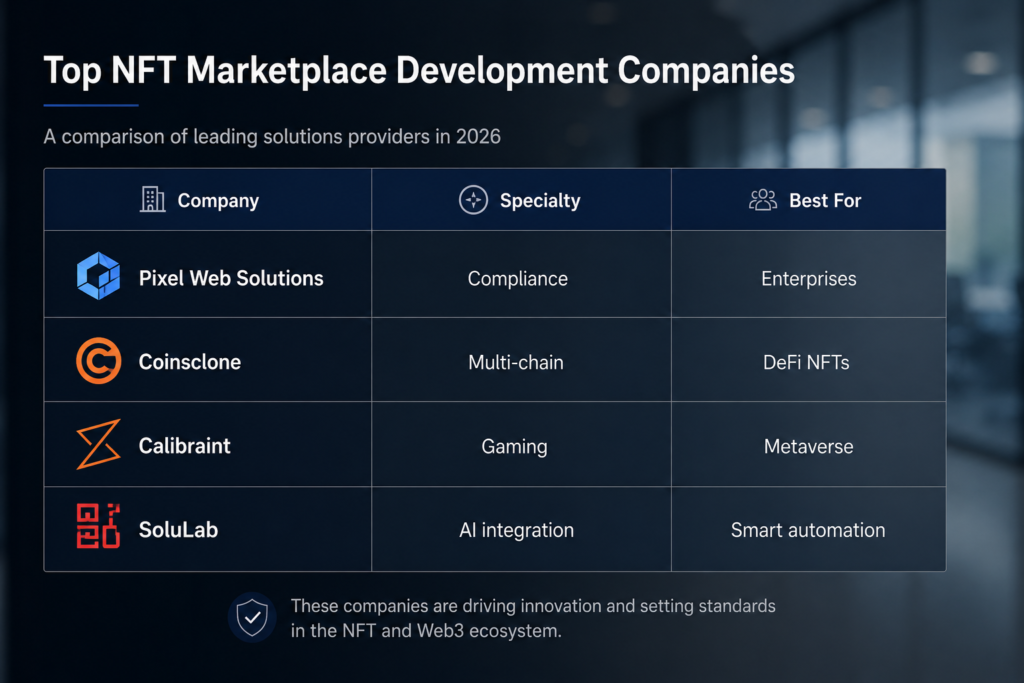
What Businesses Should Look for in NFT Marketplace Development Companies
Selecting the right NFT marketplace development partner now requires much deeper evaluation than simply comparing feature lists.
A strong development company should understand:
- blockchain architecture
- scalability
- smart contract security
- compliance requirements
- interoperability
- wallet infrastructure
- user onboarding
- long-term platform maintenance
Businesses should also evaluate whether a company has real-world experience building:
- enterprise NFT systems
- gaming integrations
- tokenized asset platforms
- DeFi-compatible infrastructure
- multi-chain environments
Many agencies still offer outdated “clone script” solutions that fail to address the technical complexity of modern NFT ecosystems.
The strongest development partners focus on:
- infrastructure resilience
- scalability
- security
- operational sustainability
rather than short-term marketplace hype.
The Rise of Enterprise NFT Infrastructure
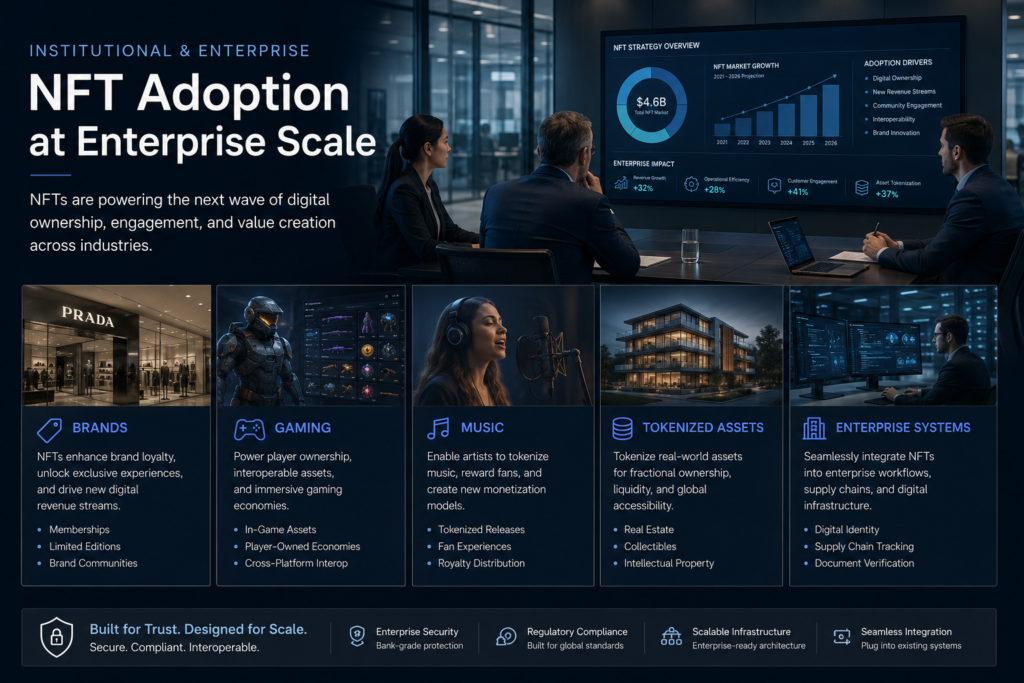
Enterprise adoption is becoming one of the most important drivers of NFT marketplace growth.
Large organizations are increasingly exploring NFTs for:
- brand engagement
- loyalty ecosystems
- digital ownership
- ticketing systems
- supply chain verification
- licensing management
Unlike retail-focused NFT projects, enterprise platforms require:
- compliance frameworks
- auditability
- scalable infrastructure
- cybersecurity safeguards
- operational stability
This has created growing demand for development companies capable of delivering institutional-grade blockchain infrastructure.
Many enterprise projects now operate closer to fintech infrastructure than traditional NFT trading platforms.
Why Gaming and Metaverse NFTs Require Specialized Development
Gaming and metaverse ecosystems represent one of the largest long-term NFT opportunities.
Unlike collectible marketplaces, gaming platforms require:
- real-time performance
- high transaction throughput
- asset interoperability
- in-game marketplace systems
- scalable backend infrastructure
NFT gaming ecosystems often involve:
- player-owned assets
- virtual economies
- marketplace trading
- reward systems
- interoperable digital ownership
These requirements create additional technical complexity that many general blockchain agencies cannot handle effectively.
As the creator economy and digital ownership systems continue evolving, gaming-focused NFT infrastructure may become one of the largest sectors within Web3.
Why AI Is Becoming Important in NFT Marketplace Development
Artificial intelligence is increasingly influencing how NFT platforms operate.
Modern NFT marketplaces are beginning to integrate AI systems for:
- fraud detection
- recommendation engines
- dynamic pricing
- content moderation
- user analytics
- behavioral insights
AI may also improve:
- marketplace personalization
- counterfeit detection
- operational efficiency
- smart contract monitoring
As blockchain ecosystems become more complex, AI-assisted infrastructure may become increasingly important for managing scalable NFT environments.
Why Compliance and Regulation Are Becoming Critical
Regulatory oversight surrounding digital assets is increasing globally.
NFT marketplaces may face growing scrutiny related to:
- securities classification
- intellectual property rights
- anti-money laundering compliance
- creator royalties
- consumer protection
- financial reporting
Development companies building enterprise NFT infrastructure increasingly need to understand:
- compliance frameworks
- KYC integration
- custody systems
- legal risk management
As institutional participation grows, regulatory readiness may become one of the biggest competitive advantages for NFT infrastructure providers.
The NFT Industry Is Moving Beyond Speculation
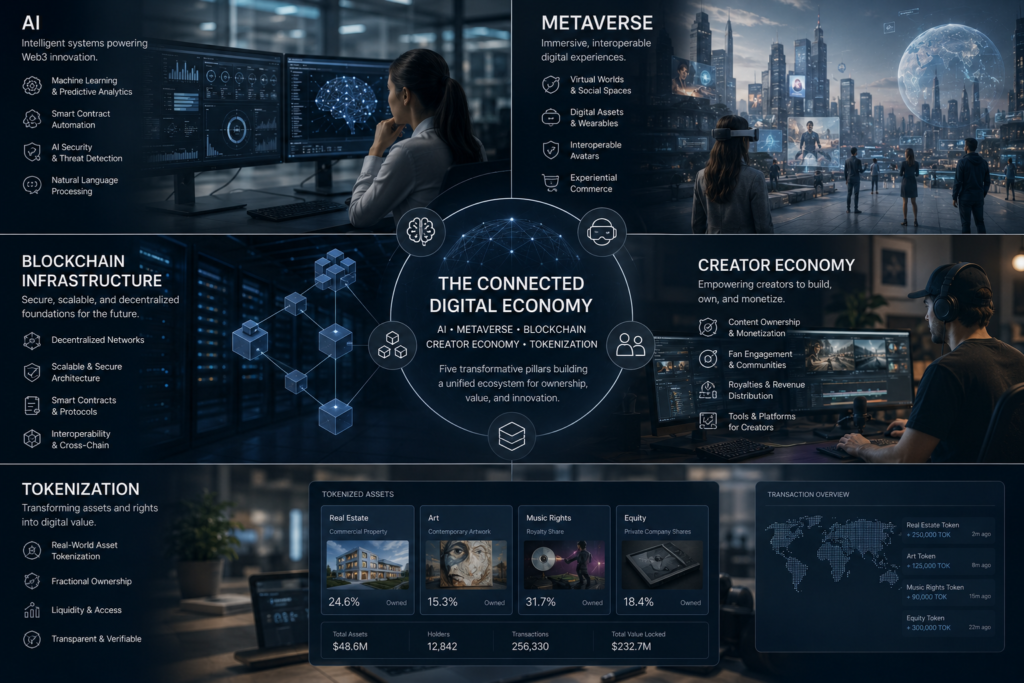
The biggest long-term shift happening within the NFT industry is the transition from speculation toward utility.
The future of NFTs is increasingly tied to:
- digital ownership systems
- blockchain identity
- tokenized infrastructure
- gaming economies
- financial integration
- creator monetization
This shift is forcing NFT marketplace development companies to evolve from:
- simple Web3 agencies
into:
- infrastructure engineering firms.
The projects most likely to survive long-term are those focused on building scalable ecosystems rather than chasing short-term hype cycles.
Final Thoughts
NFT marketplace development in 2026 is no longer about launching generic trading platforms.
Modern NFT ecosystems require:
- scalable blockchain infrastructure
- smart contract security
- multi-chain interoperability
- compliance readiness
- enterprise-grade reliability
As businesses increasingly integrate blockchain systems into gaming, finance, loyalty programs, and digital ownership, NFT marketplaces are evolving into broader Web3 infrastructure platforms.
The strongest development companies are those capable of balancing:
- scalability
- security
- interoperability
- user experience
- long-term operational resilience
The NFT industry is maturing rapidly, and the next generation of platforms will likely be defined not by speculation — but by infrastructure quality and real-world utility.
FAQ
What is NFT marketplace development?
NFT marketplace development involves building blockchain-based platforms where users can create, buy, sell, and manage digital assets and tokenized ownership systems.
Why is multi-chain support important for NFT marketplaces?
Multi-chain infrastructure allows NFT platforms to support multiple blockchain ecosystems, improving scalability, accessibility, and interoperability.
Why is smart contract security critical for NFT platforms?
NFT marketplaces often manage digital assets and financial transactions, making smart contract vulnerabilities a major security risk.
What industries are using NFT marketplaces?
NFT infrastructure is increasingly being used across gaming, music, ticketing, real estate, digital identity, and tokenized financial systems.
How are NFT marketplaces evolving in 2026?
NFT marketplaces are shifting away from speculative collectibles toward utility-driven infrastructure supporting digital ownership and enterprise blockchain systems.