







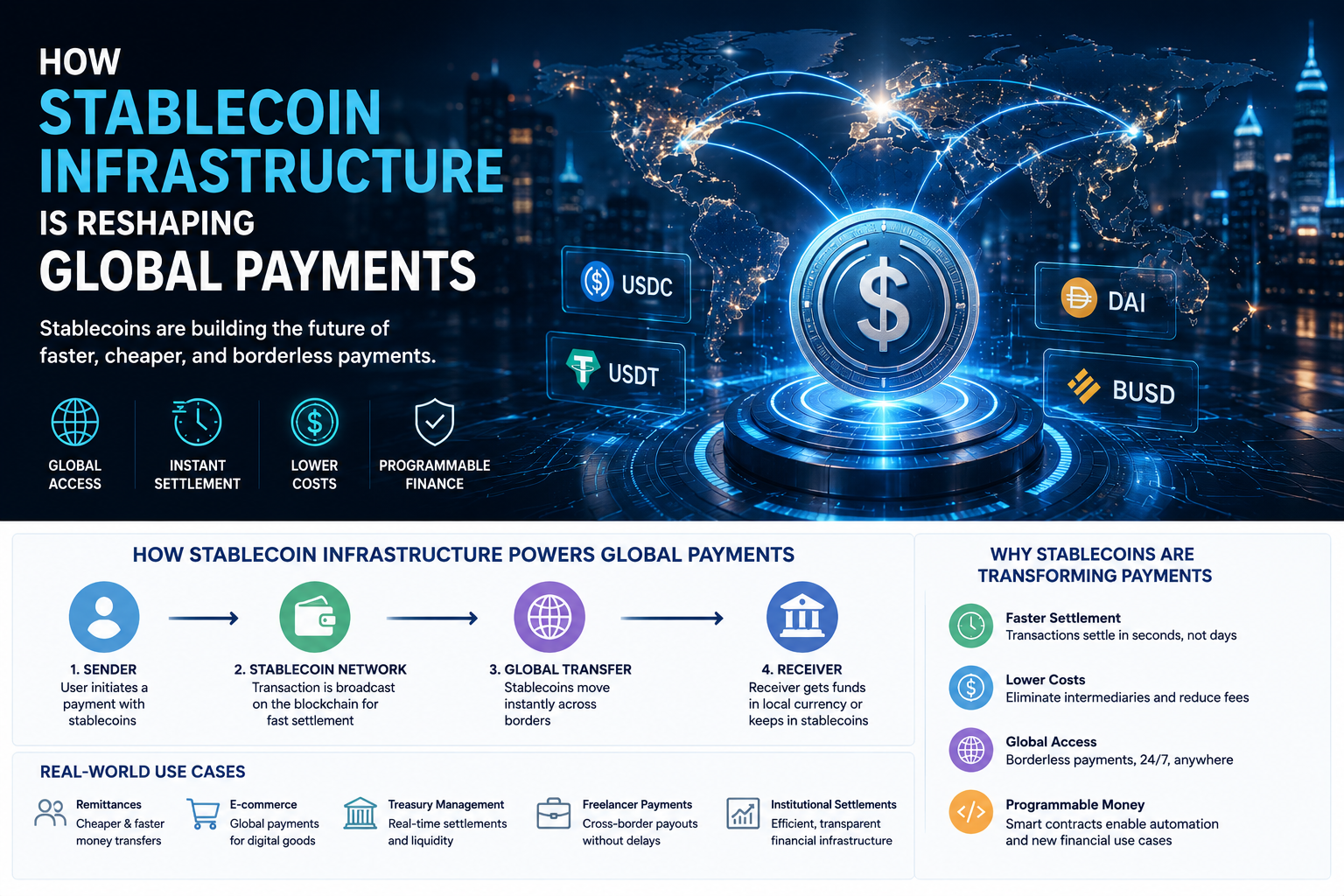
The global financial system is undergoing a major transformation as stablecoins increasingly evolve from crypto trading tools into infrastructure for international payments, digital commerce, and institutional finance.
- What Are Stablecoins?
- Why Traditional Global Payments Remain Slow
- Why Stablecoins Are Attractive for Global Payments
- How Stablecoins Are Expanding Beyond Crypto Trading
- Why Institutions Are Exploring Stablecoin Infrastructure
- Stablecoins and Tokenized Finance
- Why Regulation Is Becoming Increasingly Important
- Why Stablecoins Matter for Emerging Markets
- Security Remains a Critical Challenge
- Could Stablecoins Transform Global Finance?
- Final Thoughts
- FAQ
Over the last few years, stablecoins have become one of the fastest-growing segments within blockchain ecosystems because they combine:
- blockchain efficiency
- digital accessibility
- price stability
- near-instant settlement
Unlike highly volatile cryptocurrencies, stablecoins are designed to maintain relatively stable value, making them more practical for:
- cross-border transactions
- remittances
- treasury management
- digital settlements
- online commerce
As adoption accelerates, stablecoin infrastructure is beginning to reshape how value moves globally.
What Are Stablecoins?
Stablecoins are blockchain-based digital assets linked to external reserve assets such as:
- fiat currencies
- treasury reserves
- commodities
Most major stablecoins are pegged to the U.S. dollar.
Popular examples include:
- USDT
- USDC
- DAI
- FDUSD
Their primary purpose is to reduce volatility while preserving the benefits of blockchain technology, including:
- global accessibility
- programmable transactions
- rapid settlement
- decentralized transferability
Because of these features, stablecoins are increasingly functioning as payment infrastructure rather than speculative crypto assets.
Why Traditional Global Payments Remain Slow
Despite decades of technological progress, international payment systems still face several inefficiencies.
Cross-border transfers often involve:
- multiple banking intermediaries
- settlement delays
- currency conversion fees
- restricted operating hours
- complex compliance procedures
International wire transfers can sometimes take several business days to fully settle.
These delays create operational challenges for:
- businesses
- freelancers
- international workers
- global eCommerce platforms
Traditional payment systems were not originally designed for:
- 24/7 operations
- instant global transfers
- programmable digital finance
Stablecoin infrastructure is increasingly being explored as an alternative settlement layer capable of reducing many of these limitations.
Why Stablecoins Are Attractive for Global Payments
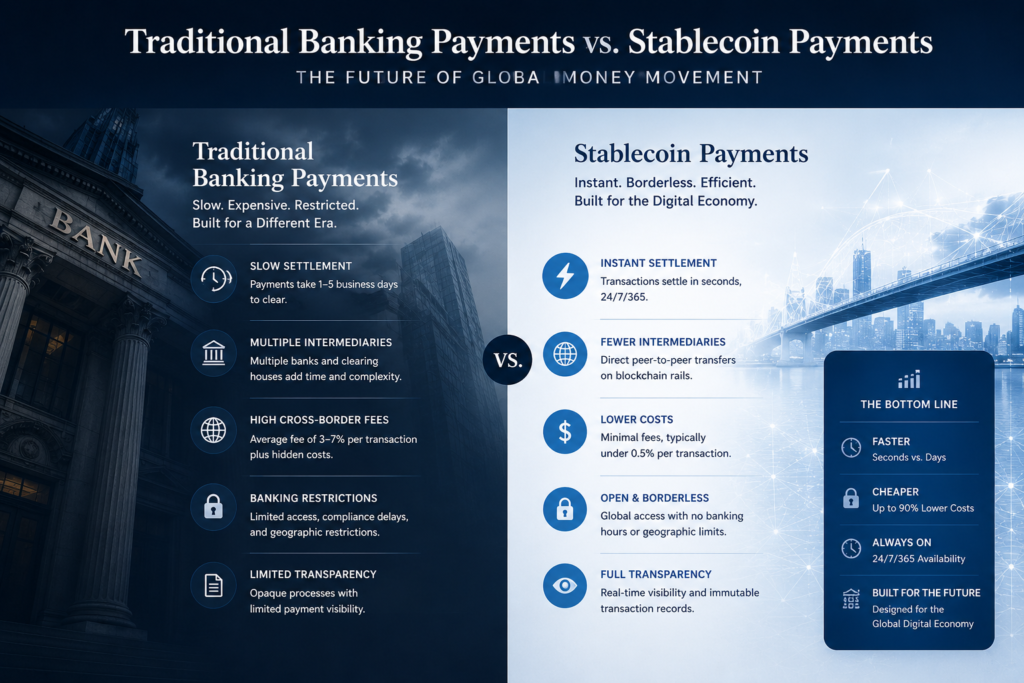
Stablecoins offer several advantages that make them highly attractive for modern payment systems.
Faster Settlement
Traditional banking infrastructure often relies on delayed settlement windows.
Stablecoin transactions can settle:
- within minutes
- continuously
- across global blockchain networks
This allows businesses and individuals to move funds significantly faster.
Lower Transaction Costs
Cross-border transfers frequently involve:
- wire fees
- exchange conversion costs
- intermediary banking expenses
Stablecoin systems can reduce many of these operational costs, especially for:
- remittances
- international commerce
- digital businesses
- global freelancers
24/7 Financial Operations
Traditional banking systems operate within limited business hours.
Blockchain networks operate continuously.
Stablecoins enable:
- weekend payments
- instant transfers
- real-time global settlements
- always-on financial infrastructure
Programmable Payments
One of the most powerful features of stablecoins is programmability.
Stablecoin infrastructure can integrate with:
- smart contracts
- automated treasury systems
- tokenized finance applications
- decentralized finance protocols
This creates entirely new possibilities for digital financial automation.
How Stablecoins Are Expanding Beyond Crypto Trading

Initially, stablecoins were primarily used within cryptocurrency exchanges to:
- provide trading liquidity
- hedge volatility
- move funds between platforms
Today, their role is expanding rapidly into mainstream financial infrastructure.
Stablecoins are increasingly being used for:
- payroll systems
- international commerce
- remittance networks
- institutional settlements
- treasury management
- online payments
In many emerging markets, stablecoins are also becoming tools for:
- digital dollar access
- inflation protection
- borderless savings
- cross-border commerce
This broader utility is helping stablecoins transition from crypto-native products into real-world financial infrastructure.
Why Institutions Are Exploring Stablecoin Infrastructure
Banks, fintech companies, payment providers, and financial institutions are increasingly researching stablecoin systems because of their potential to modernize settlement infrastructure.
Stablecoins may improve:
- liquidity management
- payment efficiency
- treasury operations
- collateral mobility
- international settlement systems
- institutional blockchain governance
At the same time, governments and regulators are closely monitoring how stablecoins could affect:
- monetary policy
- banking systems
- financial stability
- capital controls
As blockchain infrastructure matures, stablecoins are becoming one of the strongest examples of how digital assets may integrate with traditional finance.
Stablecoins and Tokenized Finance

Stablecoins are becoming deeply connected to the growth of tokenized financal infrastructure.
They increasingly function as:
- settlement assets
- collateral systems
- liquidity layers
- digital payment rails
As tokenized assets expand across:
- real estate
- bonds
- treasury products
- equities
- financial infrastructure
stablecoins may become one of the foundational settlement mechanisms connecting blockchain systems with traditional markets.
However, this integration also creates systemic risk concerns if stablecoin ecosystems experience:
- liquidity pressure
- reserve instability
- cybersecurity failures
- operational disruptions
Why Regulation Is Becoming Increasingly Important
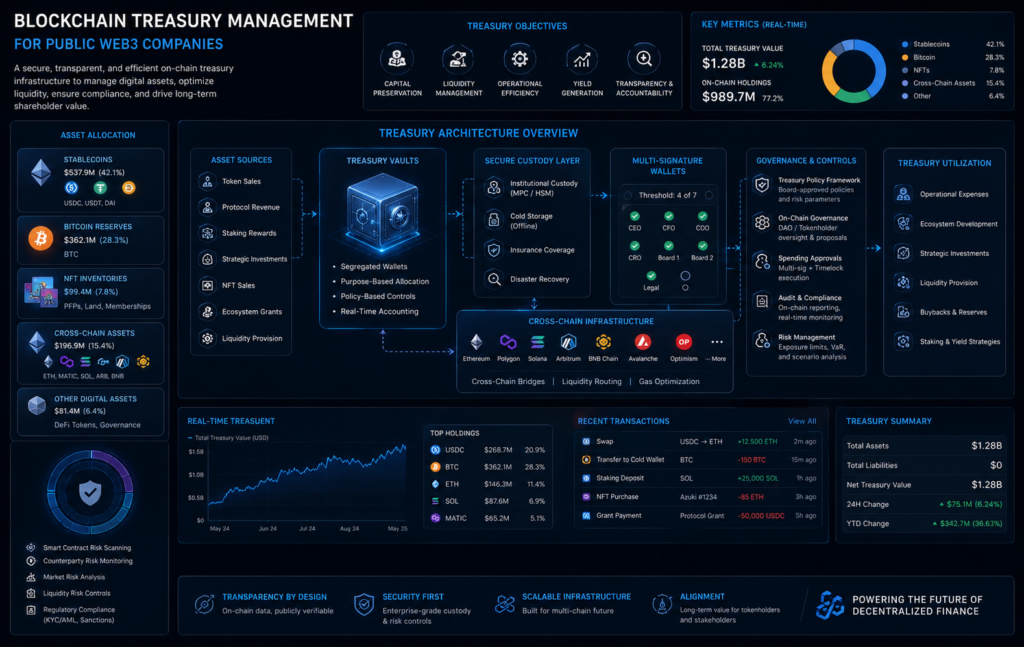
As stablecoin adoption grows, governments and regulators are increasing scrutiny around:
- reserve transparency
- auditing standards
- redemption guarantees
- consumer protection
- financial stability
One of the largest concerns involves whether stablecoin issuers maintain sufficient reserves during periods of market stress.
Large-scale redemption events could create liquidity pressure similar to traditional financial crises.
Because stablecoins increasingly operate as infrastructure for digital finance, regulators are exploring:
- licensing frameworks
- reserve requirements
- compliance standards
- oversight systems
The long-term success of stablecoin infrastructure will likely depend heavily on institutional trust and regulatory clarity.
Why Stablecoins Matter for Emerging Markets
Stablecoin adoption is growing particularly fast in regions facing:
- currency instability
- inflation
- banking limitations
- high remittance costs
For many users, stablecoins provide:
- access to digital dollars
- faster international transfers
- lower payment costs
- alternative financial infrastructure
Freelancers, global workers, and online businesses increasingly use stablecoins for:
- salary payments
- international commerce
- cross-border transactions
This real-world utility is helping stablecoins gain adoption far beyond speculative crypto trading.
Security Remains a Critical Challenge
As stablecoins become more integrated into global financial systems, security becomes increasingly important.
Stablecoin ecosystems rely heavily on:
- smart contracts
- blockchain networks
- custodial infrastructure
- reserve management systems
- cross-chain bridge vulnerabilities
- DeFi security risks
- AI-powered smart contract auditing
The broader blockchain industry still faces major security risks involving:
- smart contract exploits
- bridge vulnerabilities
- operational failures
- governance attacks
Without strong infrastructure security, stablecoin systems may struggle to achieve mainstream institutional adoption.
Modern blockchain security systems are increasingly integrating:
- AI-powered auditing
- automated monitoring
- real-time vulnerability detection
to improve infrastructure resilience.
Could Stablecoins Transform Global Finance?
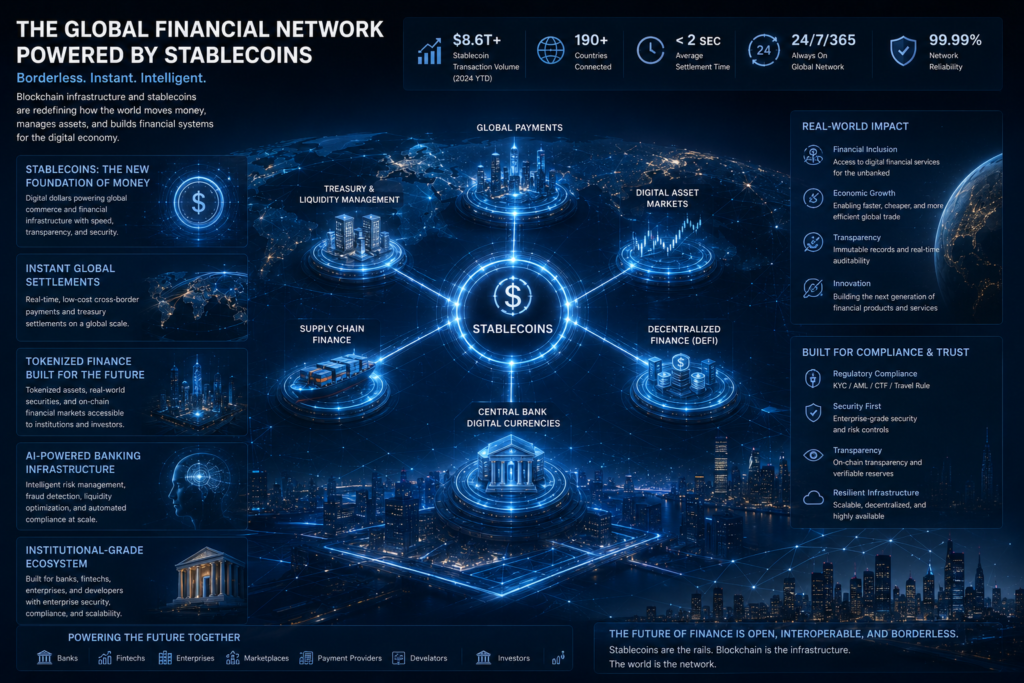
Stablecoins are increasingly being viewed as one of the most important infrastructure layers within the future digital economy.
Their combination of:
- speed
- accessibility
- programmability
- global reach
makes them highly attractive for modern financial systems.
While stablecoins may not completely replace traditional banking systems, they could significantly modernize:
- international settlements
- cross-border commerce
- treasury infrastructure
- payment networks
The future of finance may involve hybrid systems where:
- banks
- fintech companies
- blockchain infrastructure
- stablecoin networks
operate together within interconnected digital financial ecosystems.
Final Thoughts
Stablecoins are rapidly evolving from crypto trading tools into foundational infrastructure for global digital finance.
Their ability to enable:
- near-instant settlement
- lower transaction costs
- borderless transfers
- programmable payments
- NFT infrastructure systems
positions them as one of the most important innovations within blockchain infrastructure.
However, large-scale adoption will depend on:
- regulation
- security
- reserve transparency
- institutional trust
- operational resilience
As blockchain systems continue integrating into global finance, stablecoins may become one of the clearest examples of how Web3 infrastructure transforms real-world economic activity.
FAQ
What are stablecoins?
Stablecoins are blockchain-based digital assets designed to maintain stable value by being linked to assets such as fiat currencies or reserves.
Why are stablecoins important for payments?
Stablecoins enable faster settlement, lower transaction costs, 24/7 transfers, and programmable financial infrastructure.
How are stablecoins used globally?
Stablecoins are increasingly used for remittances, payroll systems, international commerce, treasury operations, and digital settlements.
What are the risks of stablecoins?
Major risks include reserve instability, smart contract vulnerabilities, cybersecurity threats, liquidity pressure, and regulatory uncertainty.
Can stablecoins replace traditional banking systems?
Stablecoins may not fully replace banks, but they could become an important infrastructure layer within future global financial systems.