






Non-fungible tokens (NFTs) first gained mainstream attention through digital art collections, celebrity projects, and speculative trading activity. During the early growth phase of the NFT market, much of the public conversation centered around profile-picture collections and high-value artwork sales.
- What NFTs Actually Represent
- Why NFT Adoption Initially Focused on Art
- NFTs Are Becoming Infrastructure Rather Than Collectibles
- NFTs and Real-World Asset Tokenization
- Why Stablecoin Infrastructure Supports NFT Ecosystems
- Security Remains a Major Challenge
- Why Institutions Are Paying Attention to NFT Infrastructure
- Could NFTs Become Part of the Future Internet?
- Final Thoughts
- FAQ
However, the broader technology behind NFTs has evolved significantly.
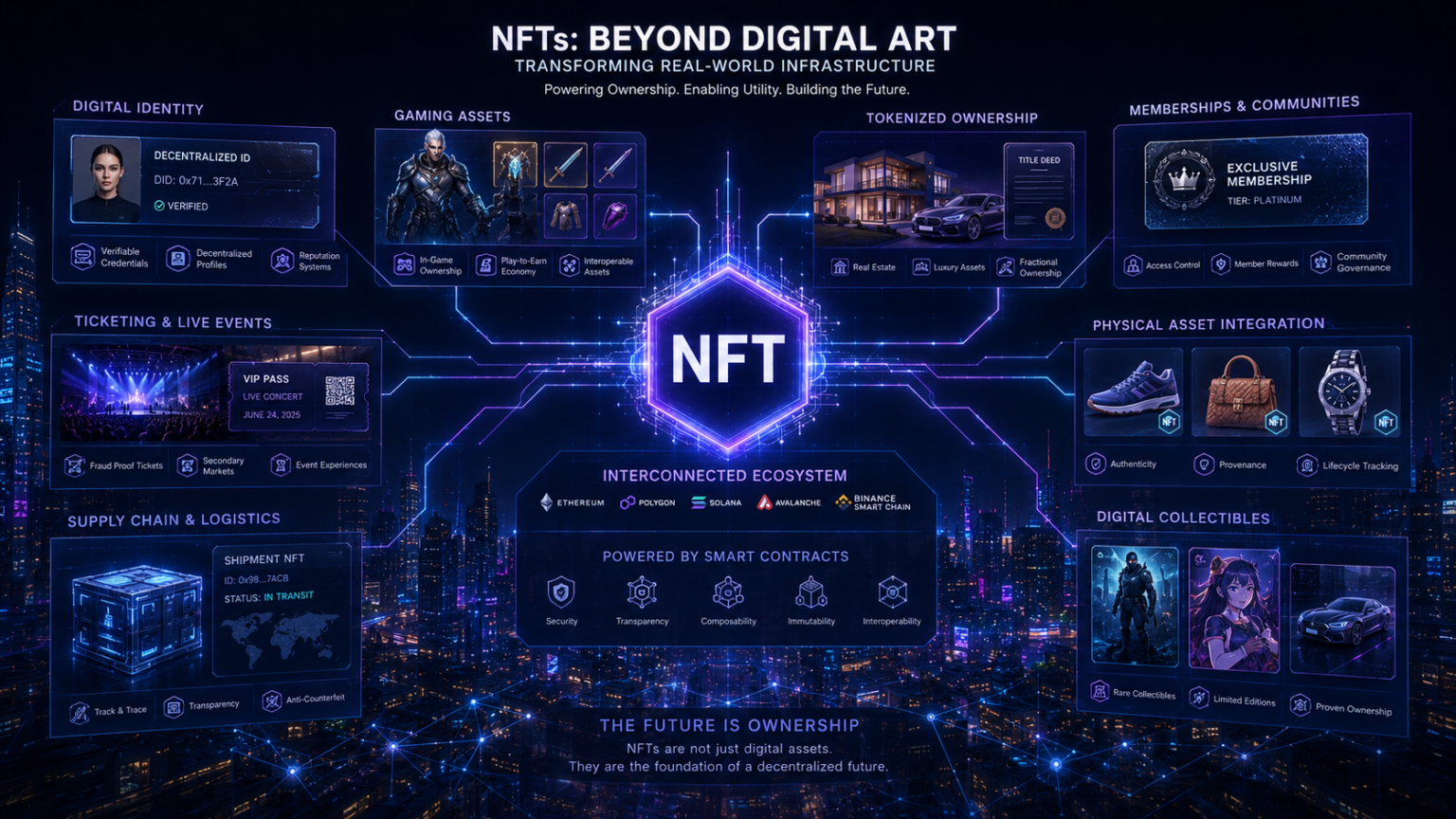
Today, NFTs are increasingly being viewed as infrastructure for:
- digital ownership
- identity systems
- gaming ecosystems
- real-world asset representation
- ticketing platforms
- memberships
- intellectual property
- enterprise systems
As blockchain technology matures, NFTs are gradually shifting from speculative assets into utility-focused infrastructure layers capable of supporting real-world applications.
This transition may define the next phase of Web3 adoption.
What NFTs Actually Represent
An NFT is a unique blockchain-based digital asset that represents ownership, authenticity, or access rights associated with a specific item or dataset.
Unlike cryptocurrencies such as Bitcoin or Ethereum, NFTs are non-interchangeable because each token contains unique properties.
NFTs can represent:
- digital media
- access permissions
- memberships
- real-world assets
- gaming items
- event tickets
- intellectual property
- identity credentials
The technology itself was never limited to digital art.
Digital art simply became the first mainstream use case that attracted large-scale public attention.
Why NFT Adoption Initially Focused on Art
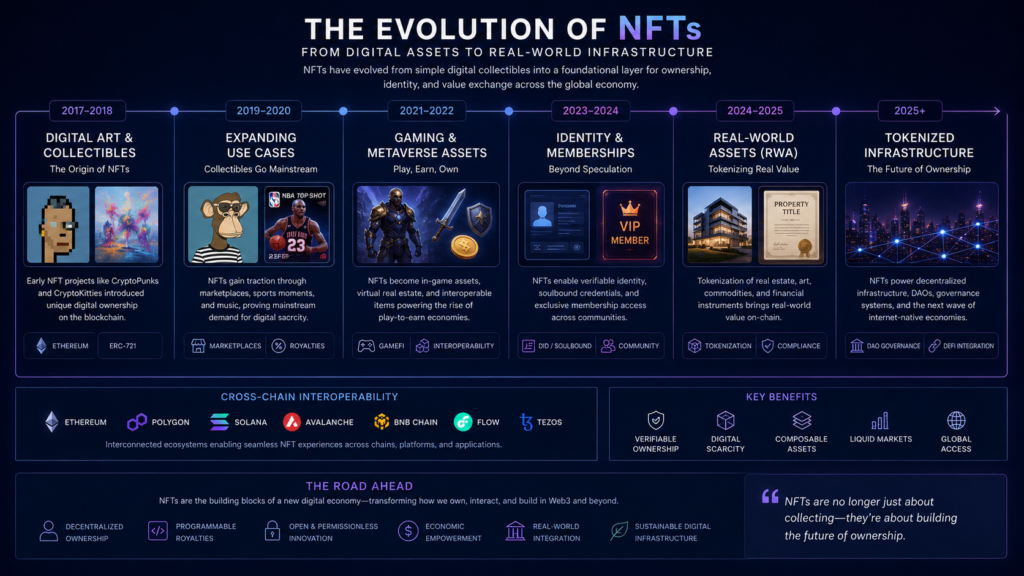
The early NFT market experienced explosive growth largely because digital art solved a straightforward problem:
proving ownership of digital content.
Blockchain systems introduced:
- transparent ownership records
- creator royalties
- scarcity mechanisms
- transferable assets
This created entirely new economic models for artists and creators.
However, as speculative activity increased, many projects focused more on:
- short-term hype
- rapid token launches
- community speculation
rather than infrastructure development.
As market conditions evolved, attention gradually shifted toward more practical applications.
NFTs Are Becoming Infrastructure Rather Than Collectibles
The NFT industry is increasingly moving toward utility-based systems rather than purely collectible markets.
Modern NFT infrastructure now supports:
Digital Identity Systems
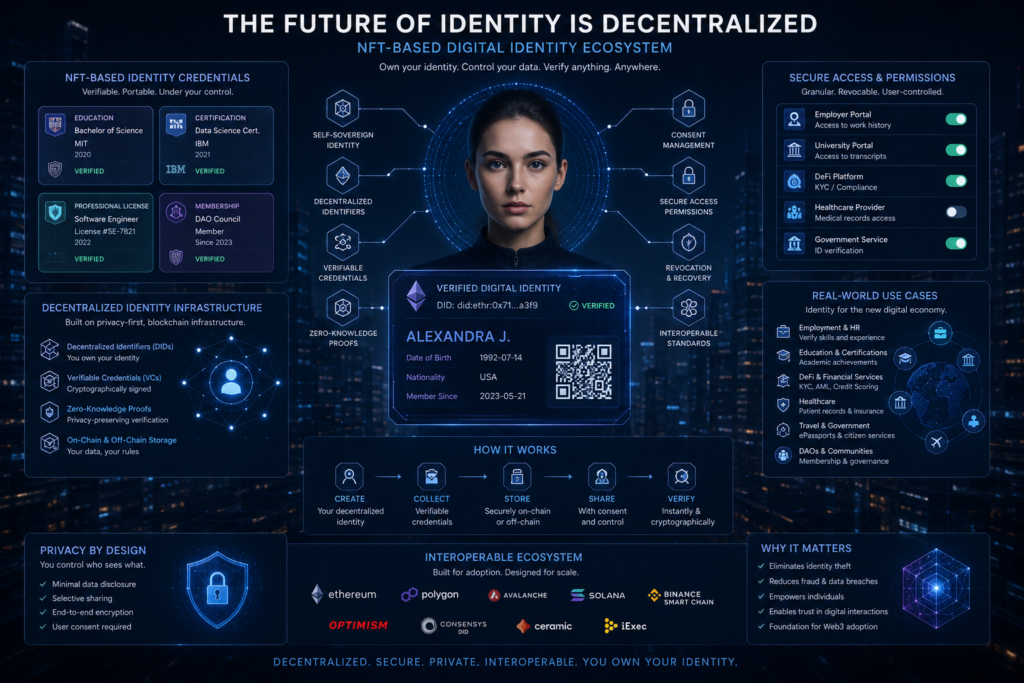
NFTs can function as verifiable digital identities that store:
- credentials
- certifications
- memberships
- reputation history
- access permissions
These systems may eventually reduce reliance on traditional username-password structures.
Blockchain-based identity systems could enable users to maintain greater control over personal information and digital interactions.
Gaming Ecosystems
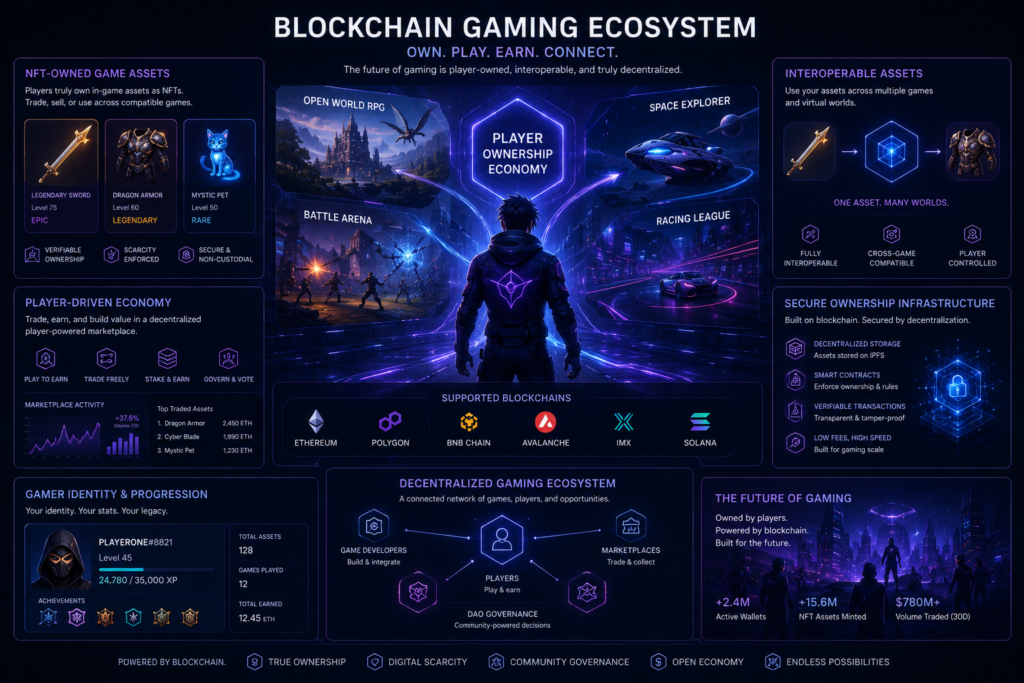
Gaming has become one of the largest emerging use cases for NFTs.
NFTs increasingly enable:
- ownership of in-game assets
- transferable virtual items
- interoperable digital goods
- player economies
Rather than purchasing assets that remain locked inside individual games, users can potentially own and transfer digital assets across ecosystems.
This creates stronger digital ownership models compared to traditional gaming systems.
Event Ticketing and Access Systems
NFTs are increasingly being explored as infrastructure for ticketing systems.
Traditional ticket systems often face issues involving:
- fraud
- scalping
- duplication
- verification challenges
NFT-based tickets can improve:
- authenticity
- traceability
- ownership verification
- secondary market transparency
Smart contracts can also automate:
- resale restrictions
- royalty distribution
- access permissions
Membership and Loyalty Programs
Brands and businesses are increasingly experimenting with NFTs for:
- membership systems
- customer rewards
- loyalty programs
- premium access
NFT-based memberships allow organizations to create portable digital relationships with users across multiple platforms.
Instead of isolated account systems, users may carry verifiable membership credentials directly through blockchain wallets.
NFTs and Real-World Asset Tokenization
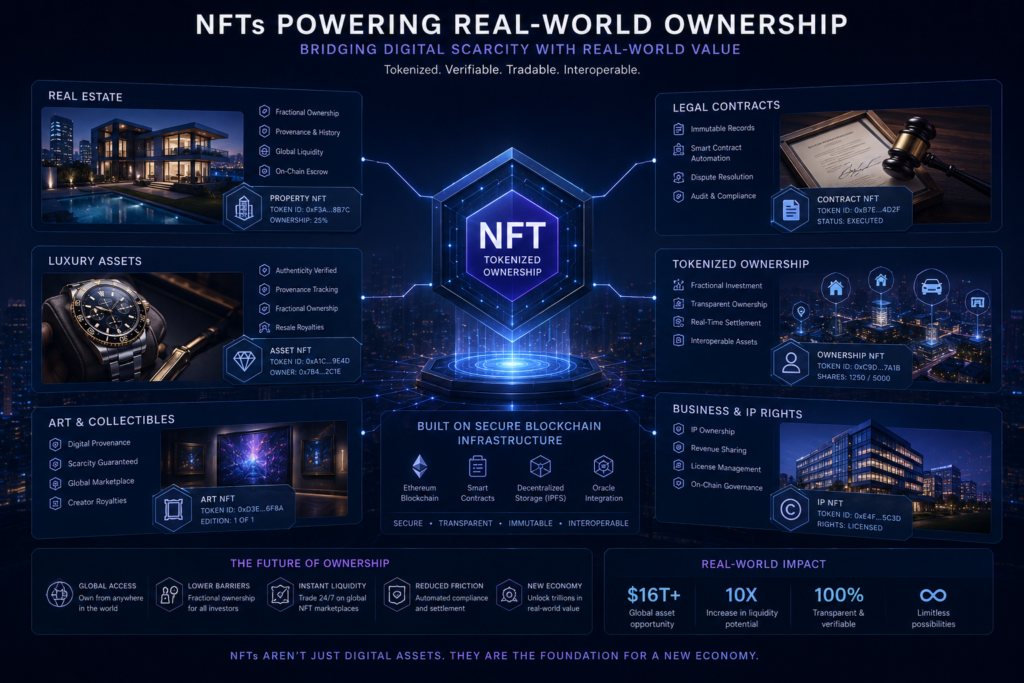
One of the most important developments involves NFTs supporting real-world asset representation.
NFT systems can potentially represent ownership of:
- real estate
- luxury assets
- legal agreements
- collectibles
- intellectual property
This evolution closely connects NFT ecosystems with broader tokenized financial infrastructure, where blockchain systems increasingly represent real-world assets such as real estate, bonds, and digital ownership systems.
As blockchain systems mature, NFTs may increasingly function as ownership layers for digital and physical assets.
Why Stablecoin Infrastructure Supports NFT Ecosystems
The growth of NFT infrastructure increasingly depends on efficient settlement systems.
Stablecoins are becoming important because they provide:
- predictable pricing
- lower volatility
- payment efficiency
- settlement liquidity
As NFT platforms expand into commerce and real-world applications, stablecoin infrastructure may play an increasingly important role by providing faster settlement, lower volatility, and more efficient payment systems.
Security Remains a Major Challenge
Despite increasing utility, NFT ecosystems still face significant security concerns.
Common risks include:
- smart contract vulnerabilities
- phishing attacks
- marketplace exploits
- wallet compromise
- infrastructure weaknesses
Cross-chain interoperability introduces additional challenges as NFT assets increasingly move across multiple blockchain ecosystems.
Growing concerns around cross-chain bridge vulnerabilities continue influencing blockchain security discussions, particularly as NFT assets increasingly move between multiple blockchain ecosystems.
Internal link:
cross-chain bridge vulnerabilities →
https://web3updates.com/cross-chain-bridge-security-risks/
Modern blockchain platforms are also increasingly exploring AI-powered smart contract auditing to strengthen ecosystem security.
Modern NFT platforms are increasingly exploring AI-powered smart contract auditing systems to identify vulnerabilities and improve ecosystem security.
Why Institutions Are Paying Attention to NFT Infrastructure
Large organizations are increasingly exploring NFTs because of their ability to support:
- digital ownership
- authentication systems
- customer engagement
- asset tracking
- tokenized commerce
Institutional interest also reflects broader developments in institutional blockchain governance, where transparency, operational resilience, and infrastructure quality are becoming increasingly important.
Rather than viewing NFTs solely as collectibles, institutions increasingly see them as infrastructure components within larger blockchain ecosystems.
Could NFTs Become Part of the Future Internet?
The broader Web3 vision increasingly depends on ownership systems that are:
- portable
- programmable
- verifiable
- interoperable
NFTs may eventually become foundational layers for:
- identity
- commerce
- gaming
- digital rights
- online communities
Rather than functioning as standalone products, NFTs may increasingly operate as invisible infrastructure behind everyday digital experiences.
Final Thoughts
NFT technology is evolving far beyond digital art and collectible speculation.
Today, NFT infrastructure increasingly supports:
- digital ownership
- identity systems
- gaming ecosystems
- memberships
- real-world assets
- tokenized commerce
As blockchain adoption continues expanding, NFTs may become one of the foundational layers connecting users, assets, and digital systems across the Web3 ecosystem.
The future of NFTs may depend less on speculative trading activity and more on their ability to create practical, scalable, and secure ownership infrastructure.
The expansion of NFT ecosystems also aligns with broader Web3 developments involving decentralized finance security risks and scalable blockchain infrastructure.
FAQ
Are NFTs only used for digital art?
No. NFTs increasingly support gaming, identity systems, ticketing, memberships, and real-world asset representation.
How do NFTs support digital ownership?
NFTs create verifiable blockchain records that establish ownership and authenticity of digital or physical assets.
Can NFTs represent real-world assets?
Yes. NFTs can potentially represent ownership of real estate, collectibles, legal agreements, and other physical assets.
What risks exist in NFT infrastructure?
Common risks include smart contract vulnerabilities, wallet attacks, phishing, and interoperability issues.
Why are institutions interested in NFTs?
Institutions increasingly view NFTs as infrastructure for authentication, digital ownership, customer engagement, and tokenized commerce.